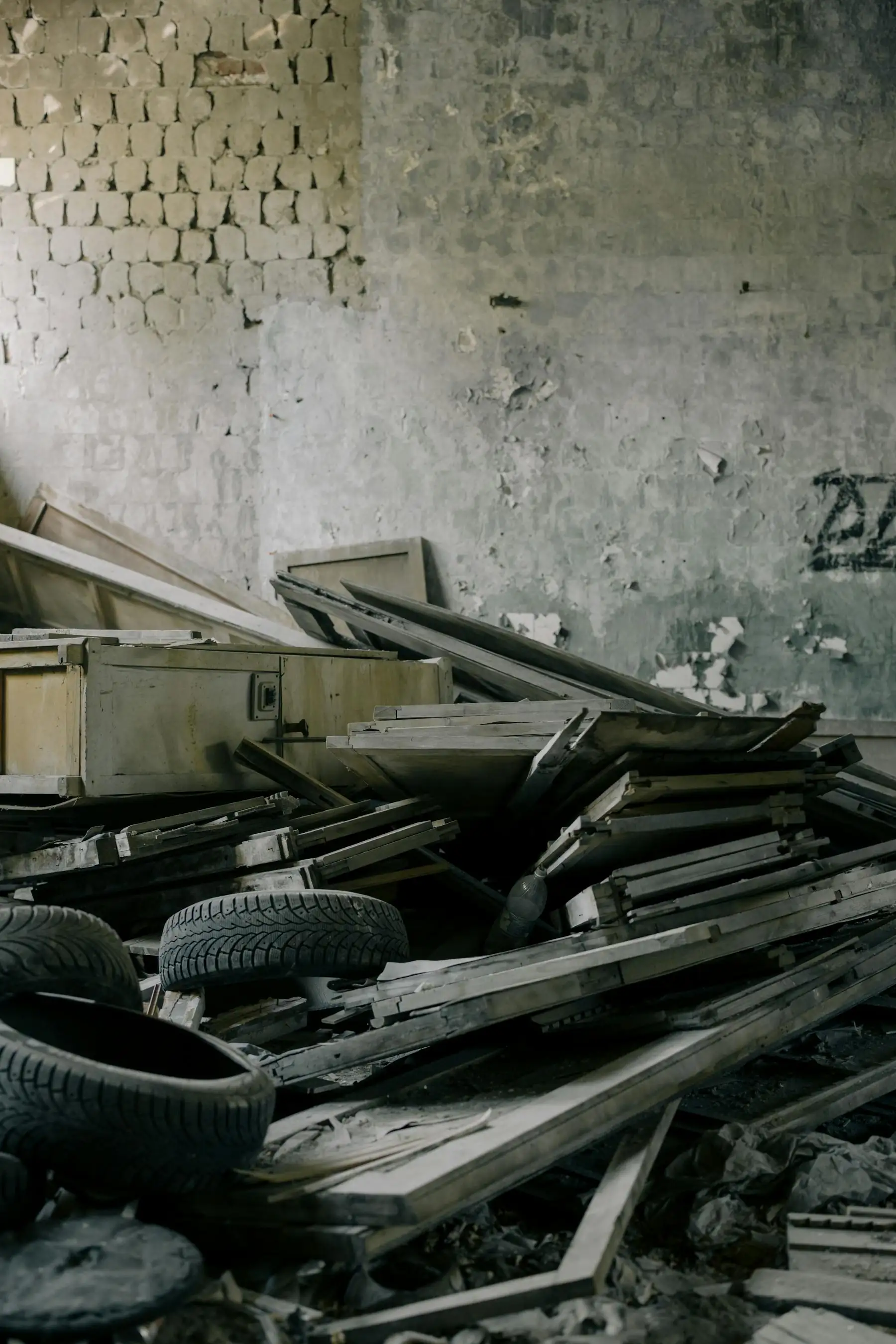
We ask for photos on almost every booking, and the ones that arrive are usually a close-up of a couch. That tells us there is a couch. It doesn't tell us how many loads the job is, whether the trailer will fit, or whether there's something in the pile that can't go. Here is what actually helps.
Shoot the whole pile, from a distance
Stand back far enough that the entire pile — or the entire room, garage or yard — is in frame. Include something for scale: a door, a car, a person. A wide shot from two different corners is worth more than ten close-ups. We are estimating volume and weight, and volume needs context.
Show what's underneath
A pile of furniture stacked on a pile of boxes stacked on old tile is three very different loads. If the pile has layers, take a photo of what's at the bottom or tell us in a sentence. Heavy material at the bottom is what pushes a load past the included ton.
Photograph the drop-off spot
- The driveway from the street, showing the approach and any overhead lines or low branches
- The gate, if the trailer needs to go through one — with something for width
- Any slope or soft ground where the trailer will sit
- Anything the truck has to pass: parked cars, mailboxes, planters
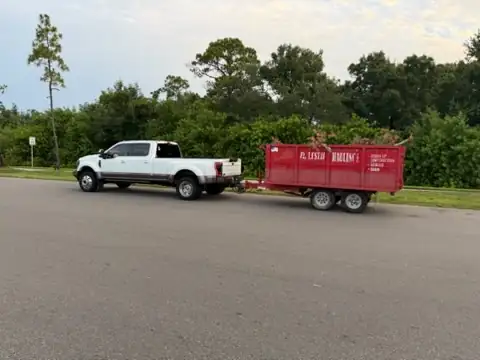
The trailer is 12 feet long and 7 feet wide, and the truck needs room to back it in straight. A photo of the approach is the difference between a clean delivery and a phone call from the driver.
A short note beats a long one
Three lines is enough: what the material is, roughly how much, and where the trailer should sit. If there's a deadline — tenant moving in Friday, closing next week — say so and we will plan the rental around it.
What we do with the photos
We look at them and tell you honestly whether it is one load or more, whether the heavy material limit of 5 yards applies, and whether anything needs to be separated out. If you would rather our crew load it, the same photos let us give you a fair estimate at $48 per man-hour instead of a guess.
The photos that don't help
We see the same handful of unhelpful shots every week, and each one costs a follow-up message:
- Close-ups of a single item with nothing around it for scale
- A dark garage shot from the doorway with the lights off — open the door and let daylight in, or turn every light on
- A pile after it has been bagged, so we can see bags but not what is in them
- The front pile but not the second pile behind the shed
- The driveway with the car still parked on it, so we can't see the surface or the width
If you would rather not take stills, a slow twenty-second video walking from the street to the pile and around it is often better than any set of photos. It shows the approach, the scale and the material in one pass, and it takes less time to shoot.
Frequently asked questions
How do I send photos?
Text them to (727) 779-8919 or email RLeslieHauling@gmail.com with your name and the delivery address.
Do I need photos for a straightforward rental?
Not strictly. If you know it's a single-load garage cleanout with nothing heavy, just book online. Photos matter most when you're unsure of the volume or the material.
Can you estimate the weight from photos?
Roughly, yes — we have hauled enough loads to know what tile, dirt and wet brush do to a scale ticket. The final number comes from the PCSW scale receipt at the facility.
Book a 10-yard dump trailer
Free local delivery, free pickup, and a family-owned crew that shows up when we say we will. Serving Clearwater, Pinellas, Hillsborough and Pasco.