Almost every call we take in Clearwater starts the same way: someone stands in their garage, or in front of a gutted bathroom, or beside a pile of fence panels the last storm knocked flat, and asks whether one trailer will do it. It is a fair question and a hard one, because nobody thinks in cubic yards. People think in pickup loads and rooms.
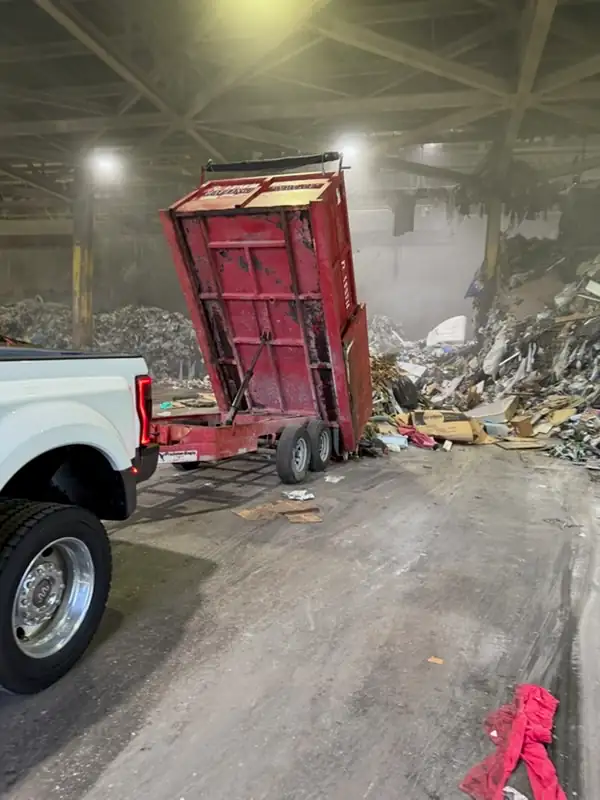
So let us translate. A 10-yard dump trailer holds roughly 10 cubic yards of material. A cubic yard is 3 feet by 3 feet by 3 feet, which is 27 cubic feet. Ten of those is about 270 cubic feet of usable space when the load is filled level with the top rail. That single number is the foundation for every estimate below, and once you can picture it, sizing a job stops being guesswork.
What 270 cubic feet looks like in the driveway
Abstract volume is useless until you anchor it to things you own. Here are the comparisons we use on the phone with homeowners in Largo, Dunedin and Safety Harbor every week.
- A standard full-size pickup bed, loaded level, holds roughly 2 to 2.5 cubic yards. A 10-yard trailer is therefore about four to five level pickup loads — and far more if you have been heaping your truck and driving slowly with a prayer.
- A typical residential trash cart is about 96 gallons, which is a hair under half a cubic yard. Ten yards is somewhere in the neighborhood of 20 to 25 of those carts, emptied and packed.
- A standard interior door is about 3 feet by 7 feet. Picture a wall of debris roughly the footprint of a small bedroom, stacked about knee-to-waist high — that is ten yards.
- Ten cubic yards is roughly the volume of a compact car, poured into a box.
We lean on the pickup comparison because most people have already made two or three dump runs before they call us. If you have hauled three level truckloads and you are still not halfway done, you are looking at a ten-yard job.
Common jobs and where they usually land
These are working ranges, not promises. Material, moisture and how carefully you load will move any of them. But after enough loads across Pinellas County, patterns emerge.
- Full garage cleanout, single-car: typically 4 to 8 cubic yards of mixed household junk, boxes, old shelving and lawn gear. Usually one trailer with room left over.
- Full garage cleanout, two-car, twenty years of accumulation: often 8 to 12 yards. This is the classic job that either just fits or needs a second load.
- Single bathroom gut, including tile, vanity, tub and drywall: commonly 3 to 6 yards, but heavy for its size because of the tile and mortar bed.
- Kitchen demo with cabinets, counters and flooring: often 6 to 10 yards. Cabinets are bulky and awkward and eat volume fast unless you break them down.
- Estate or apartment cleanout, one to two bedrooms of furniture and belongings: commonly 8 to 12 yards.
- Yard cleanup with palm fronds, brush and hedge trimmings: highly variable. Brush is mostly air. Ten yards of unbroken branches can be surprisingly little actual wood.
- Fence tear-out, 100 to 150 linear feet of wood privacy fence: often 5 to 9 yards once posts and rails are stacked, more if you toss panels in whole.
Volume is only half of it — weight is the other half
A dump trailer has two limits, and most people only think about one. The first is the box: 270 cubic feet. The second is what the trailer, the truck and the road can legally and safely carry. Light and bulky material like furniture, cardboard, brush and insulation will run you out of space long before it runs you out of weight. Dense material does the exact opposite.
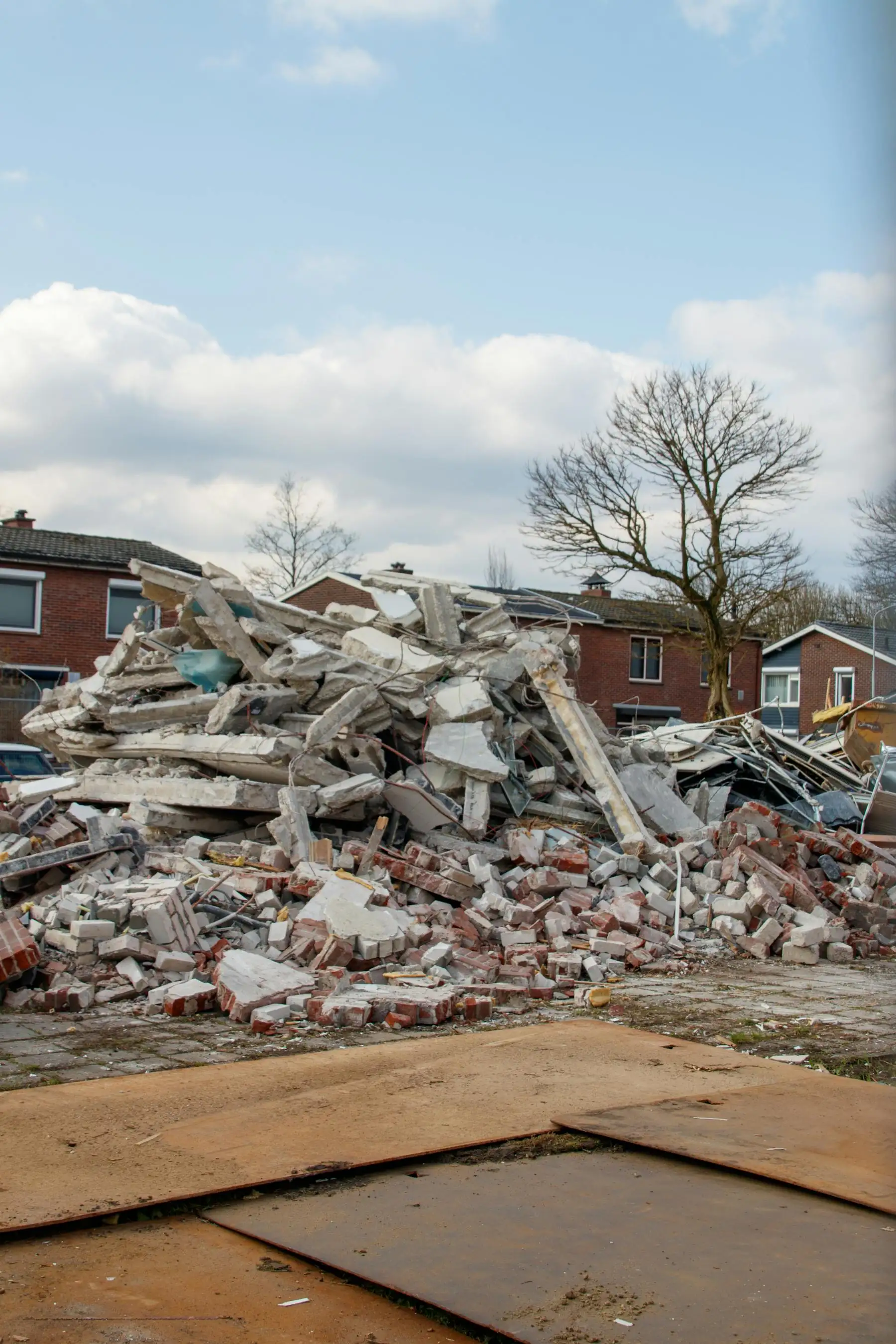
This is why our rentals include a set tonnage allowance, with overage billed per ton and backed by a certified scale receipt. It is also why we cap heavy material — rock, dirt, concrete, brick and block — at roughly five yards per load. Five yards of concrete is an enormous amount of weight, and a trailer loaded to the rail with it is not something anyone should be towing down Gulf-to-Bay.
- Light and bulky (furniture, cardboard, brush, insulation, plastic toys): you will hit the top rail first. Volume is your limit.
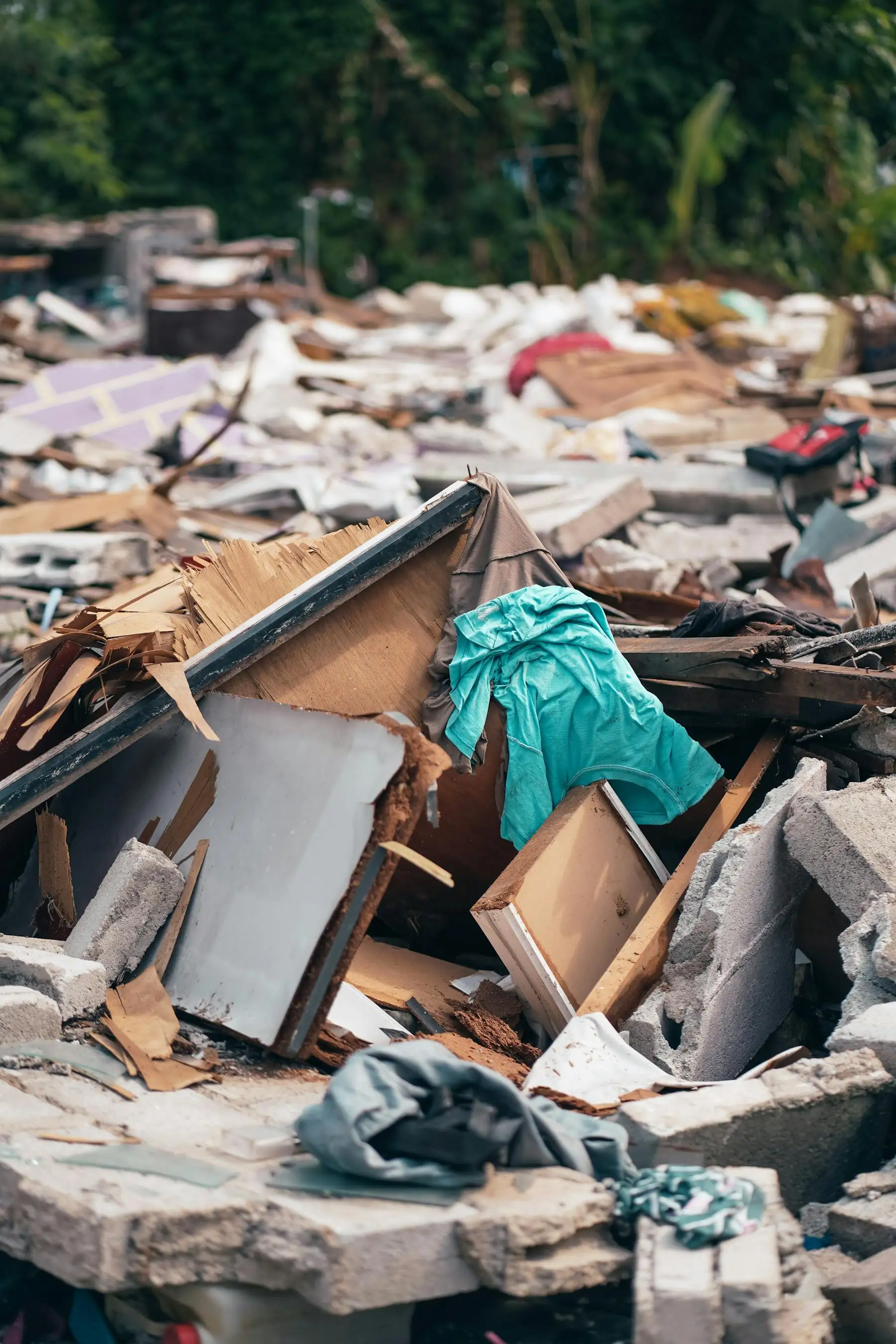
- Medium (mixed construction debris, drywall, wood, roofing, carpet): volume and weight tend to run out at about the same time, which is why mixed C and D debris is the sweet spot for a ten-yard trailer.
- Heavy (concrete, brick, block, dirt, sod, tile, gravel, wet material): weight is your limit, and it arrives early. Half a trailer can be a full load.
Load it level with the top rail — this one is not optional
Whatever you put in, the load has to sit level with the top rail. No heaping above the sides, no mattress cresting over the back like a wave. The load gets tarped for transport, and it cannot be tarped legally or safely if it is mounded over the top. On the drive down US-19 or across the bridges toward Tampa, anything above the rail is a projectile waiting to happen. That makes the top few inches of the trailer your most valuable real estate, and how you use them decides whether you make one trip or two.
- 1Flat and heavy on the bottom. Plywood, doors, countertops, cabinet carcasses laid flat. They fill the floor evenly and give you a stable deck to build on.
- 2Break down anything hollow. A cabinet, a dresser, a plastic storage bin — all of it is mostly air. Five minutes with a reciprocating saw or a boot can turn a cubic yard of furniture into a third of a yard of flat panels.
- 3Fill the voids. Bags of small debris, scraps and insulation are what you stuff into the gaps between the big pieces. Do this as you go, not at the end.
- 4Save the long stuff for last, laid flat. Trim, fence rails, pipe, conduit — these go on top, lying flat, where they help hold the load down instead of sticking up through the tarp.
- 5Stop at the rail. If you are cresting over the sides, you are done. Call and we will talk about a second load.
What cannot go in, regardless of how much room is left
Space is not the only constraint. Some material cannot ride, no matter how empty the trailer looks. We cannot take hazardous waste, asbestos, biomedical waste, explosives, compressed gas cylinders, or liquids of any kind. Paint that has not fully dried, half-full fuel cans, propane tanks and pool chemicals all stay behind. Pinellas County Solid Waste runs household hazardous waste programs for exactly this material.
When in doubt, describe it to us
Honestly, we can size your job over the phone in two minutes. Tell us what the material is, roughly how much there is, and whether it is heavy. We have seen the same job a hundred times in Clearwater, St. Petersburg and Palm Harbor, and we will tell you straight whether ten yards covers it. Material and moisture change everything, and a wet load is a different animal from a dry one.
Ready to get it off your driveway? Book your 10-yard dump trailer online at robertlesliehauling.com — delivery and pickup are free within our local radius — or call us at (727) 779-8919 and we will help you size the load before you pay for anything.
Book a 10-yard dump trailer
Free local delivery, free pickup, and a family-owned crew that shows up when we say we will. Serving Clearwater, Pinellas, Hillsborough and Pasco.