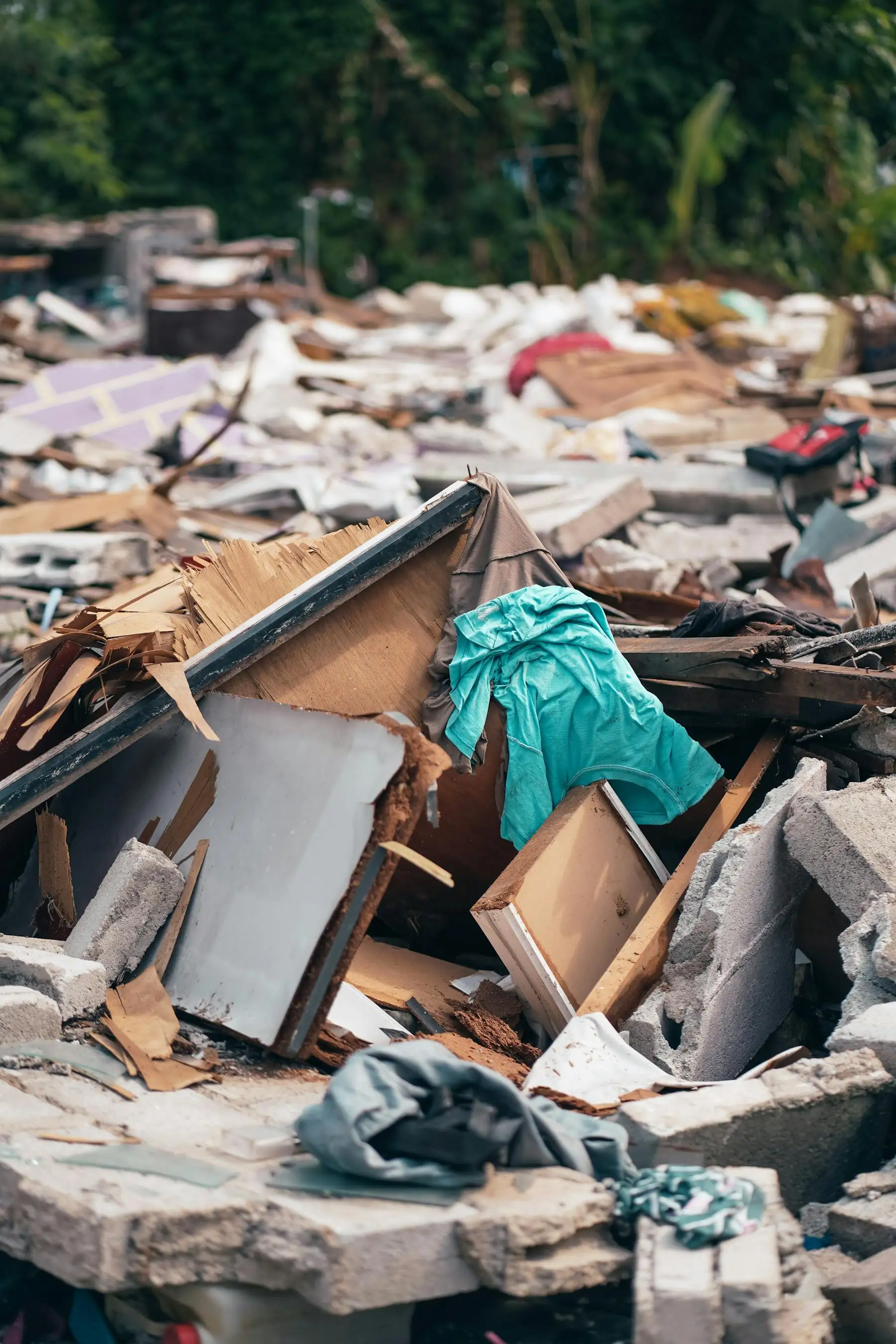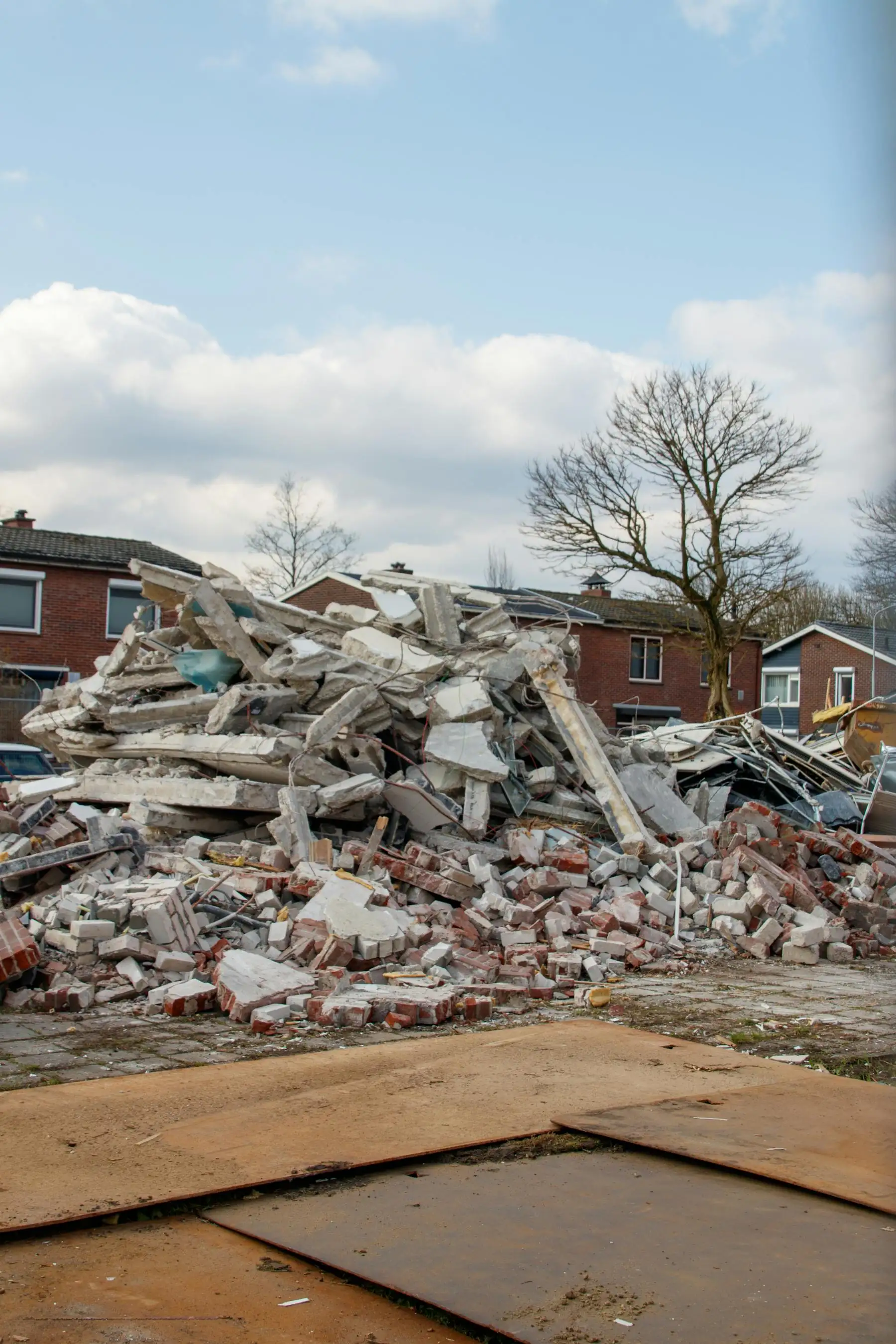
Drywall is the great deceiver of the remodeling world. On the wall it is a half-inch skin that takes up no space you would ever notice. On the floor of a dump trailer it is a mound of chalky, crumbling, dust-shedding chunks that seem to have multiplied while you were not looking. Homeowners in Clearwater and St. Petersburg gutting a bathroom are consistently shocked by how much volume comes out of a room they could walk across in four steps.
The physics are not mysterious. Intact drywall is dense and flat. Demolished drywall is broken, angled and full of air pockets, and it will not stack. That expansion is the number most people miss when they try to size a load.
Start with the sheet count
Everything begins with one dimension. A standard sheet of drywall is 4 feet by 8 feet, which is 32 square feet of surface. That is the unit to count in.
- A 4x8 sheet of half-inch drywall commonly weighs somewhere in the range of 50 to 60 pounds.
- A 4x8 sheet of five-eighths-inch drywall — the thicker fire-rated stock you find on garage walls and ceilings — is heavier, often in the 65 to 75 pound range.
- Moisture-resistant and cement backer boards used behind tile in showers are heavier still, and backer board in particular is closer to concrete than to gypsum for weight planning.
- Old plaster-and-lath, common in the older housing stock around downtown Clearwater and parts of St. Pete, is dramatically heavier than modern drywall. If you are pulling plaster, size it as heavy debris, not as drywall.
To count sheets in a room, take the wall area — perimeter times ceiling height — plus the ceiling area, and divide by 32. A 10 by 12 foot bedroom with 8-foot ceilings has 44 feet of perimeter, so roughly 352 square feet of wall, plus 120 square feet of ceiling. That is about 472 square feet, or roughly 15 sheets. If both sides of the interior walls come down, you are counting both faces.
Now account for the fluff
Fifteen sheets stacked neatly is a stack about seven or eight inches tall — call it a third of a cubic yard. But you are not going to have fifteen neat sheets. You are going to have several hundred pieces, most of them broken along the stud lines, none of them lying flat, all of them wedged against each other at angles.
Demolished drywall commonly occupies somewhere in the range of two to three times the volume of the intact sheets, and if you tear it out in small angry chunks with a hammer, it can be worse. That is the single biggest driver of load size on a drywall job, and it is entirely within your control.
What common remodels actually produce
These are working ranges from real Pinellas County jobs. Your house will vary, and moisture will move everything.
- Single bathroom gut down to studs — drywall, backer board, tile, vanity, tub or shower pan: often 3 to 6 cubic yards. Heavy for its size, because tile and backer board are dense.
- Kitchen gut including drywall, cabinets, counters and flooring: often 6 to 10 yards. Cabinets are the volume hog here, not the drywall.
- Single bedroom taken to studs: often 3 to 5 yards of drywall debris plus whatever insulation, trim and flooring comes with it.
- Whole-house drywall replacement after water intrusion, small to mid-size home: commonly well past ten yards. This is a two-load job, and often more. Water-damaged drywall is also significantly heavier than dry, so the weight climbs alongside the volume.
- Popcorn ceiling scrape only: surprisingly little volume — the scrapings are mostly dust and small chunks — but bag it, because loose dust is miserable to load and worse to tarp.
Weight, moisture, and why we ask about water damage
Dry drywall is not a heavy material by the standards of construction debris. Fifteen sheets of half-inch might run somewhere around 800 to 900 pounds — real weight, but nothing that threatens a tonnage allowance on its own. Add the tile, the backer board, the mortar bed under an old shower floor and a cast iron tub and you are in a completely different weight class.
Water-damaged drywall is the other multiplier. Gypsum drinks water and holds it. In a Florida remodel — a slab leak, a roof leak, a post-storm gut in a Dunedin or Safety Harbor home — the drywall coming out can be substantially heavier than the same drywall going in. This is exactly the situation where the certified scale receipt earns its keep: you see the actual weight that came off the trailer rather than arguing about an estimate.
Loading a gut job efficiently
- 1Lay the biggest flat pieces on the trailer floor first — drywall sheets, plywood, cabinet doors, countertop pieces. Build a deck.
- 2Stack subsequent drywall flat on top of that deck, pressing down as you go. Flat drywall stacks beautifully; jagged drywall does not.
- 3Feed studs, trim and long pieces in lengthwise along the sides, lying flat, filling the perimeter.
- 4Bag the dust, the insulation and the small crumbs. Bags fill voids and they keep dust from blowing out from under the tarp.
- 5Put the heavy dense stuff — tile, backer board, mortar — low and spread across the floor, not piled in one corner.
- 6Stop level with the top rail. A gut-job load has to be tarped, and drywall dust in particular is not something you want blowing across US-19.
What stays out of the trailer
Two things come up constantly on remodel jobs. First, if your home is old enough that asbestos is a possibility in joint compound, popcorn ceiling texture or floor tile, stop and get it tested and abated properly. We cannot take asbestos, and neither can the transfer station. Second, leftover paint, solvents, adhesives and any other liquid stays out — no liquids of any kind. Those route through Pinellas County Solid Waste household hazardous waste collection.
Every remodel is different, and the honest answer is that a phone call beats a spreadsheet. Tell us the rooms, the age of the house, whether there is tile or plaster or water damage, and we will size the load with you before you swing the first hammer.
Gutting a room this month? Get a 10-yard dump trailer in your driveway — book it online at robertlesliehauling.com, or call (727) 779-8919 and we will walk through your sheet count and tell you straight whether it is one load or two.
Book a 10-yard dump trailer
Free local delivery, free pickup, and a family-owned crew that shows up when we say we will. Serving Clearwater, Pinellas, Hillsborough and Pasco.