It is the question we get more than any other, and it is a fair one. A driveway is expensive to replace, and plenty of Clearwater and Palm Harbor homeowners have a horror story about a container that left gouges, cracked a paver field, or peeled a strip of sealcoat off on its way out.
The short answer: a dump trailer is dramatically gentler on a driveway than a roll-off dumpster, because of how it arrives and how it sits. But gentler is not the same as zero risk, and a little prep on your end removes almost all of what is left. Here is what actually touches your concrete and what to do about it.
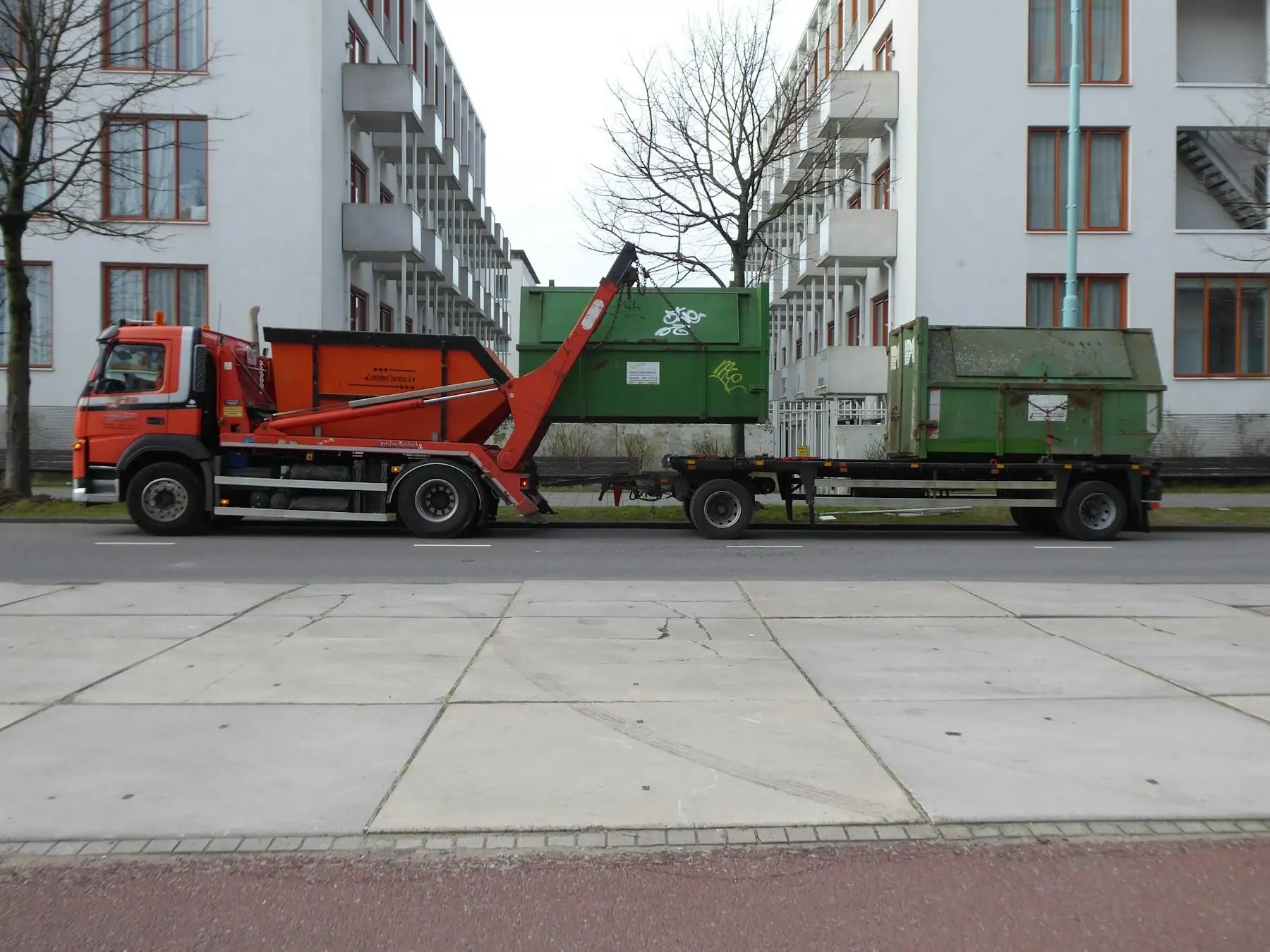
Why roll-offs damage driveways in the first place
A roll-off container does not get placed. It gets skidded. The truck tilts its bed, the box slides down and drags across the surface until it lands. Pulling it out is the same motion in reverse, except now the container is loaded with thousands of pounds of debris and the winch is dragging that weight across your slab. The damage almost always happens on the pull-out, not the drop.
Add Florida heat to that. Asphalt drives and sealcoated surfaces soften considerably in July and August. Steel dragging across warm asphalt does exactly what you would expect.
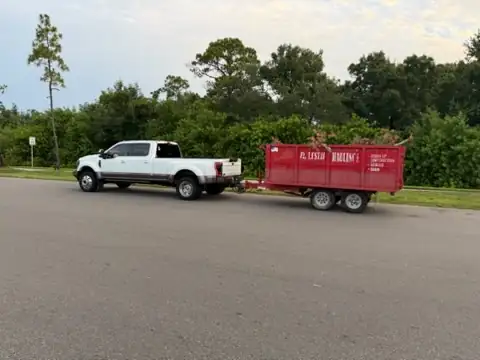
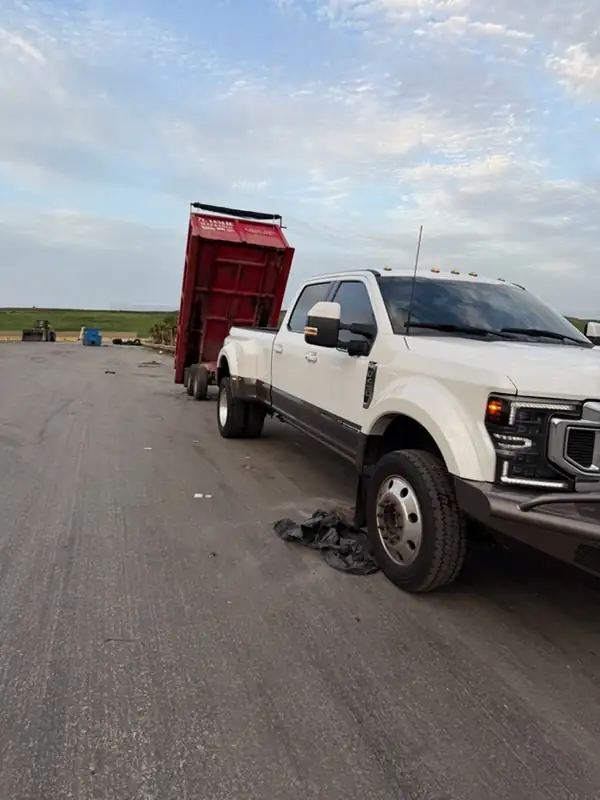
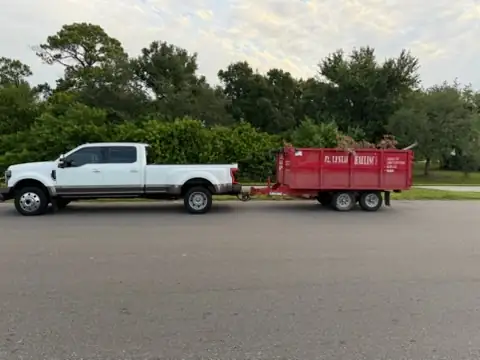
How a dump trailer contacts your driveway instead
Our trailer rolls in on pneumatic tires behind a truck and stops where you want it. Nothing slides. Nothing gets winched. While it sits there, the only points of contact are:
- The tires, which spread weight over a broad rubber footprint
- The tongue jack foot at the front, which carries the tongue weight on a small pad
- Optionally, stabilizer or leveling blocks if the surface has a slope
That is it. No steel edges biting into the surface, no dragging, no roller rails. The load is distributed across rubber rather than concentrated on a skid rail. This is the single biggest reason homeowners with pavers, stamped concrete, or a recently sealed drive choose a trailer.
The two real risk points, and how we handle them
1. The jack foot
The front jack carries a concentrated point load. On a hot day, on soft asphalt or on old pavers with sand joints, a bare jack foot can leave a dimple. The fix is trivial: a wide pad or a piece of plywood under the foot spreads that load out to nothing. We bring pads, and if your surface is delicate, say so when you book and we will double up.
2. Tire imprinting on hot asphalt
Loaded tires parked on soft asphalt for many days in peak summer can leave faint imprints. This is rare on concrete, which is what most Pinellas driveways are, and it is largely avoidable by putting plywood under the tires or positioning the trailer on the concrete apron rather than the softest section of asphalt. If your drive is asphalt and it is August, mention it and we will plan the spot with you.
Surfaces that need a little extra thought
- Paver driveways — beautiful and common around Safety Harbor and Palm Harbor. Pavers handle distributed rolling weight well but dislike point loads and dislike being twisted. We back straight in and pad the jack. Avoid asking us to pivot the trailer sharply on a paver field.
- Sealcoated asphalt — wait at least a couple of weeks after a fresh sealcoat before putting anything heavy on it, and check with your sealcoat contractor for their cure recommendation.
- Old or cracked concrete — a slab that is already spiderwebbed or heaving from a root can crack further under any additional load, trailer or not. If yours has visible failures, tell us and we will look at a street placement or a firmer spot.
- Grass and soft ground — a loaded trailer on wet St. Augustine will rut and sink. After a Gulf storm week, we would rather put it on the hard surface.
- Decorative or stamped concrete — same as pavers: fine under tires, pad the jack, no sharp pivots.
Where should the trailer actually sit?
The best spot is usually the flattest, firmest part of the driveway with a clean straight approach and no low branches overhead. Think about the whole job, not just the drop:
- 1Place it as close as you can to the pile you are removing — every extra step you walk with a wheelbarrow is a step you will take fifty times.
- 2Leave the rear doors clear so the tailgate can swing and so you can walk material in.
- 3Do not block a vehicle you need during the rental, and do not block your own gate.
- 4Keep it off the sidewalk and public right-of-way unless you have checked local rules — the City of Clearwater and each Pinellas municipality set their own requirements for placing containers in the street, and you should verify before assuming.
- 5Watch for irrigation heads, septic lids, drain field areas and shallow water lines if any part of the trailer would sit off the hard surface.
Loading habits that protect your drive too
Damage is not only about the container. It is also about how you feed it. A few things worth knowing:
- Do not build the pile you are loading from directly on top of the driveway if it contains broken concrete or sharp metal. Use a tarp.
- Do not overload with heavy material. Dirt, rock and concrete are limited to roughly five yards per load because of weight, not space. An overloaded trailer is harder on everything, including your slab and the tow-out.
- Distribute weight over the axles rather than piling everything against the tailgate. It tows better and it sits better.
- Load flat and level rather than heaping above the rails. Anything that can blow out on the road has to be tarped anyway.
The honest bottom line
No responsible hauler will promise you a mathematical zero chance of a mark on any surface, on any day, in any condition — anyone who does is selling. What we will tell you is that the no-drop, no-drag design of a dump trailer removes the mechanism that causes almost all container-related driveway damage, and that a pad under the jack foot and a smart placement handle the rest.
If you have pavers, a fresh sealcoat, or a slab you are nervous about, tell us when you reserve and we will plan the placement around it. Grab your date at robertlesliehauling.com or call (727) 779-8919 and we will walk the options with you before the trailer ever rolls up.
Book a 10-yard dump trailer
Free local delivery, free pickup, and a family-owned crew that shows up when we say we will. Serving Clearwater, Pinellas, Hillsborough and Pasco.