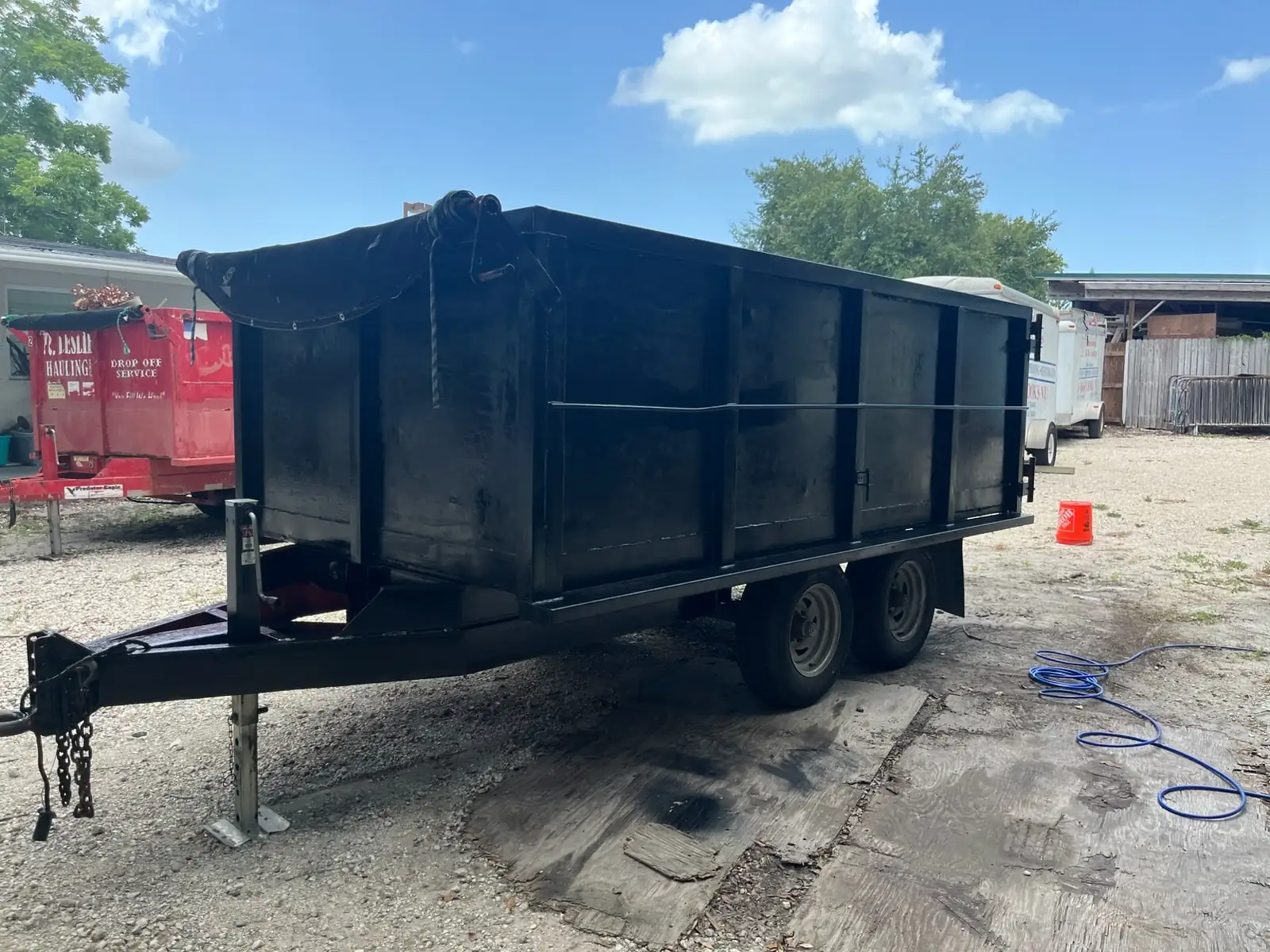
Most people start a cleanout project by searching for a dumpster, because that is the word everybody knows. Then a neighbor mentions a dump trailer, and suddenly there are two options that seem to do the same job. They do not. The container is only half the story. How the container gets onto your property, how it sits there, and how it leaves matter far more than the shape of the steel box.
Here is the honest breakdown for a Clearwater or Pinellas County property owner trying to decide, without the sales pitch. Both tools are good at something. The trick is matching the tool to your driveway, your material, and your timeline.
The delivery difference is the whole difference
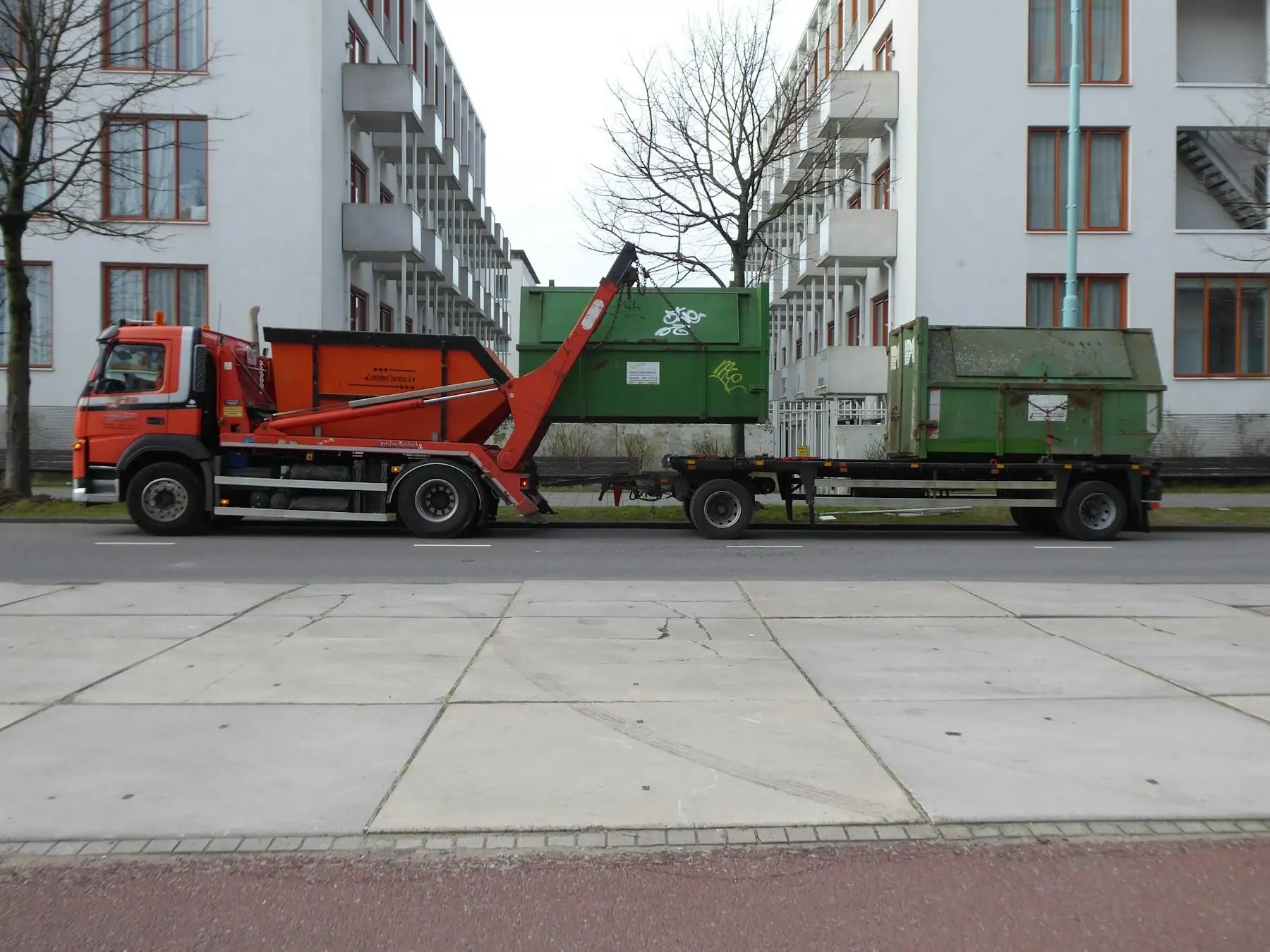
A roll-off dumpster arrives on a specialized truck with a hoist. The driver tilts the bed, and the container slides down rails and drags across your surface until it settles. On the way out, a cable winch drags it back up the rails. That dragging motion is where roll-off complaints come from: gouged pavers, scraped sealcoat, cracked concrete at the lip of the drive, and a set of parallel scuff lines where the rear rollers bit in.
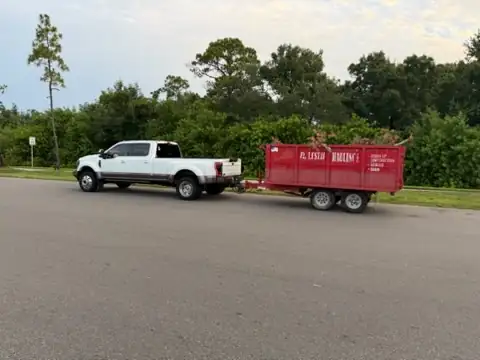
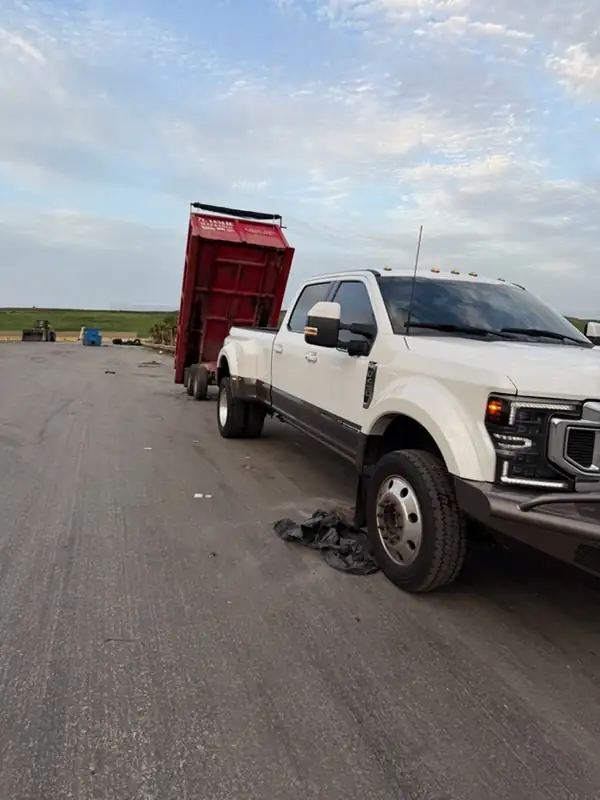
A dump trailer never gets dropped or dragged. It is towed in on its own tires behind a pickup, backed into position, and unhooked. It sits on rubber and a jack foot. When the job is done, we hook back up and tow it away. Nothing skids across your concrete in either direction. On a driveway with pavers, decorative stamping, a fresh sealcoat, or an aging slab, that single mechanical fact is usually the deciding factor.
Loading height: your back will notice
A roll-off has tall vertical walls. Depending on the size, you may be lifting debris four to six feet straight up over a rim, or dragging it up a narrow rear ramp. That is fine for a demo crew with a wheelbarrow ramp and three guys. It is miserable for a homeowner clearing out a garage on a Saturday.
A dump trailer sits low. The deck height is closer to the ground, the sides are shorter, and the rear barn doors or tailgate swing open so you can walk material straight in. Practical things this changes:
- You can roll a wheelbarrow or hand truck up a short ramp instead of hoisting over a wall
- Bulky furniture goes in at chest height rather than overhead
- Yard waste and palm fronds get walked in instead of thrown, which means you actually fill the space instead of stacking a lopsided pile
- Kids, spouses and neighbors can help without needing to be able to deadlift a vanity over their head
Footprint and maneuvering in real Pinellas neighborhoods
A lot of the housing stock around Clearwater, Largo, Dunedin and Safety Harbor was built with narrow drives, tight side yards, low canopy trees and mature landscaping right up to the pavement. A roll-off truck needs a straight approach and room to raise its bed several feet in the air. Under a live oak or a low power drop, that can be a hard no.
A dump trailer is towed and backed like any trailer, which means it can be jockeyed into places a roll-off truck simply cannot serve: behind a gate, along the side of a house, into a tight cul-de-sac apron, into a townhome parking stall. If your project is at a duplex in St. Petersburg or a bungalow in Dunedin where the drive doglegs, the trailer usually wins on access alone.
Where a roll-off still wins
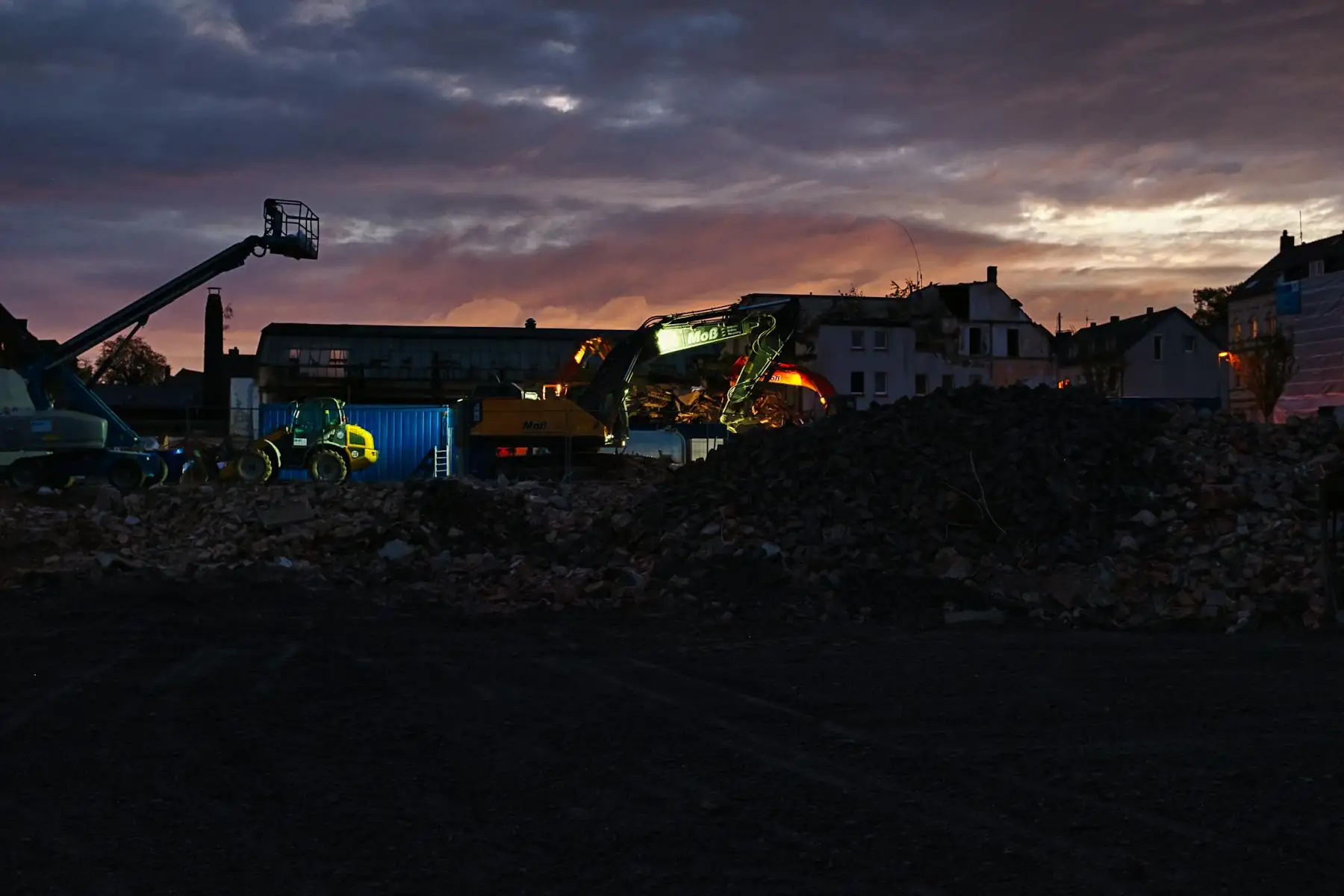
We are not going to pretend the trailer is right for everything. Roll-offs come in much larger volumes, and they are designed to sit on a job site for weeks while a crew feeds them. If you are gutting a whole commercial building or running a framing crew that produces waste every single day for a month, the sheer capacity of a large roll-off is hard to beat.
A 10-yard dump trailer covers a surprising amount of residential work, though. A single-room gut, a garage cleanout, a bathroom remodel, a fence tear-out, a whole-yard trim, a small roof section, a hoarder-style bedroom, a deck removal. Most homeowners who think they need a huge container are actually thinking in terms of pile size, not compacted volume. Debris packs down more than people expect once you break it up.
Weight matters more than volume with heavy material
This one catches people. Volume is not the limit when you are hauling dirt, rock, concrete, brick, tile or roof shingles. Weight is. Dense material will hit the legal towing weight long before the walls of the trailer are full. That is why heavy material is capped at roughly five yards per load rather than the full ten. It is not a rule we made up to be difficult, it is axle and highway law.
Practically speaking, that means you should tell us what is going in the trailer before you book. A trailer of drywall, cabinets and household junk fills up long before it gets heavy. A trailer of paver base and busted concrete gets heavy long before it looks full. Rentals include a set tonnage allowance, and anything over that is billed by the ton, so an honest description up front is what keeps your final bill boring.
What cannot go in either one
Regardless of which container you choose, the prohibited list is essentially the same, and it is not negotiable at the scale house:
- Hazardous waste of any kind — paint, solvents, pesticides, pool chemicals
- Asbestos-containing material, which requires a licensed abatement contractor
- Biomedical or medical waste, including sharps
- Explosives and ammunition
- Compressed gas cylinders, including propane tanks
- Liquids of any kind, including partly full containers
Pinellas County runs a household hazardous waste drop-off program for residents, and that is the right destination for the paint cans and pool chemicals. Check the county's solid waste page for current hours and eligibility before you load up the car. Tires, appliances with refrigerant, and electronics also have their own handling paths, so ask us before you toss them in.
Making the call
Ask yourself three questions. Does the container need to sit on a surface I would be upset to see scratched? Will the people loading it be lifting by hand? Is access tight? If the answer to any of those is yes, the trailer is the tool. If you are running an industrial-scale demo on raw ground with a machine feeding the box, get the roll-off.
Still not sure which way to go? Tell us what you are tearing out and where it is sitting, and we will tell you straight whether a 10-yard dump trailer covers it. Book your delivery date online at robertlesliehauling.com or call (727) 779-8919 and talk it through with a real person — we are family-owned and we answer our own phone.
Book a 10-yard dump trailer
Free local delivery, free pickup, and a family-owned crew that shows up when we say we will. Serving Clearwater, Pinellas, Hillsborough and Pasco.