Every fall, as people clear patios and lanais, the same items show up at the edge of a trailer: a rusted gas grill, a fire pit, and a propane cylinder or two. Most of it can go. The cylinder is the exception, and it's a serious one.
Propane cylinders: never in the trailer
Compressed gas cylinders — including most propane tanks over one pound — are prohibited in standard landfill loads. It doesn't matter if the tank feels empty. A cylinder in a load of debris being compacted at a facility is a real explosion risk, and the facility will refuse the whole load if one is found.
The right routes are simple:
- Exchange it. Most hardware stores and gas stations in Pinellas, Hillsborough and Pasco run tank exchange programs — the old tank goes back whether or not you take a new one.
- Take it to the county household hazardous waste program, which accepts propane cylinders.
- Ask the propane supplier if it's a larger tank; they typically collect their own.
Gas grills
Once the tank is removed, the grill itself is fine to load. Better still, it's mostly steel and sometimes stainless or cast aluminum, which means it has scrap value and counts against your included ton if you leave it in a general load. Pull the tank, drop the grill in a separate metal pile, and it comes out of the disposal weight entirely.
Fire pits and chimineas
Steel fire pits load like grills — scrap them. Clay chimineas and cast-concrete fire pits are heavy, brittle, and go in as general debris; break them down and load them low on the trailer floor. Make sure any fire pit is fully cold. Ashes that seem cool can hold heat for days, and a trailer of dry debris is the wrong place for them.
Charcoal, lighter fluid and ash
- Bagged, fully cold ash can go in the trailer
- Lighter fluid is a flammable liquid — household hazardous waste, not the trailer
- Unused charcoal is fine as general debris
Patio heaters and outdoor kitchens
Same principle. Remove and exchange the cylinder, then the heater is scrap metal. A built-in outdoor kitchen with a gas line needs the line capped by a plumber before demolition, and the appliances come out as metal.
Clearing a whole patio or lanai
If the grill and the fire pit are part of a larger outdoor clear-out — a lanai refresh, a move, a storm season prep — sort as you go into three piles and the loading takes care of itself.
- Set aside, not for the trailer: propane cylinders, lighter fluid, tiki torch fuel, pool chemicals, citronella oil, pesticide and fertilizer. All of it goes through the county household hazardous waste program.
- Scrap metal: the grill body, patio heater, steel fire pit, aluminum patio furniture frames, the old pool ladder. Stack it beside the trailer and it stays out of the disposal weight.
- General debris: plastic chairs, cushions, umbrellas, planters, the broken ceiling fan, screen off the enclosure. Cushions that have been rained on are surprisingly heavy, so let them dry before loading.
Concrete planters, pavers and a cast-concrete fire pit base count as heavy material and belong low on the trailer floor within the 5-yard heavy limit. Everything else is light and bulky and fills volume rather than weight.
Frequently asked questions
What if the tank is completely empty?
Still no. There's no practical way to verify a cylinder is truly empty at the facility, so all cylinders are excluded.
Can your crew take the propane tank for me?
No. Our crew loads standard debris. Cylinders need to go through an exchange or the county hazardous waste program.
Does the grill count toward my weight?
If it goes in the general load, yes. If it's set aside as scrap metal, it's separated out and doesn't count.
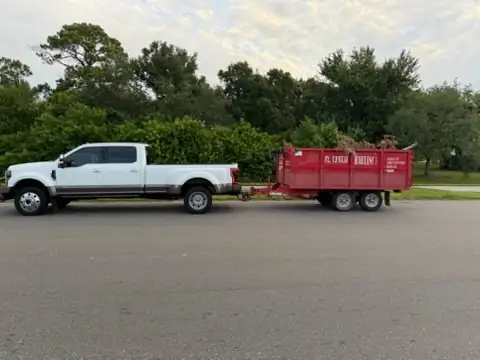
Book a 10-yard dump trailer
Free local delivery, free pickup, and a family-owned crew that shows up when we say we will. Serving Clearwater, Pinellas, Hillsborough and Pasco.