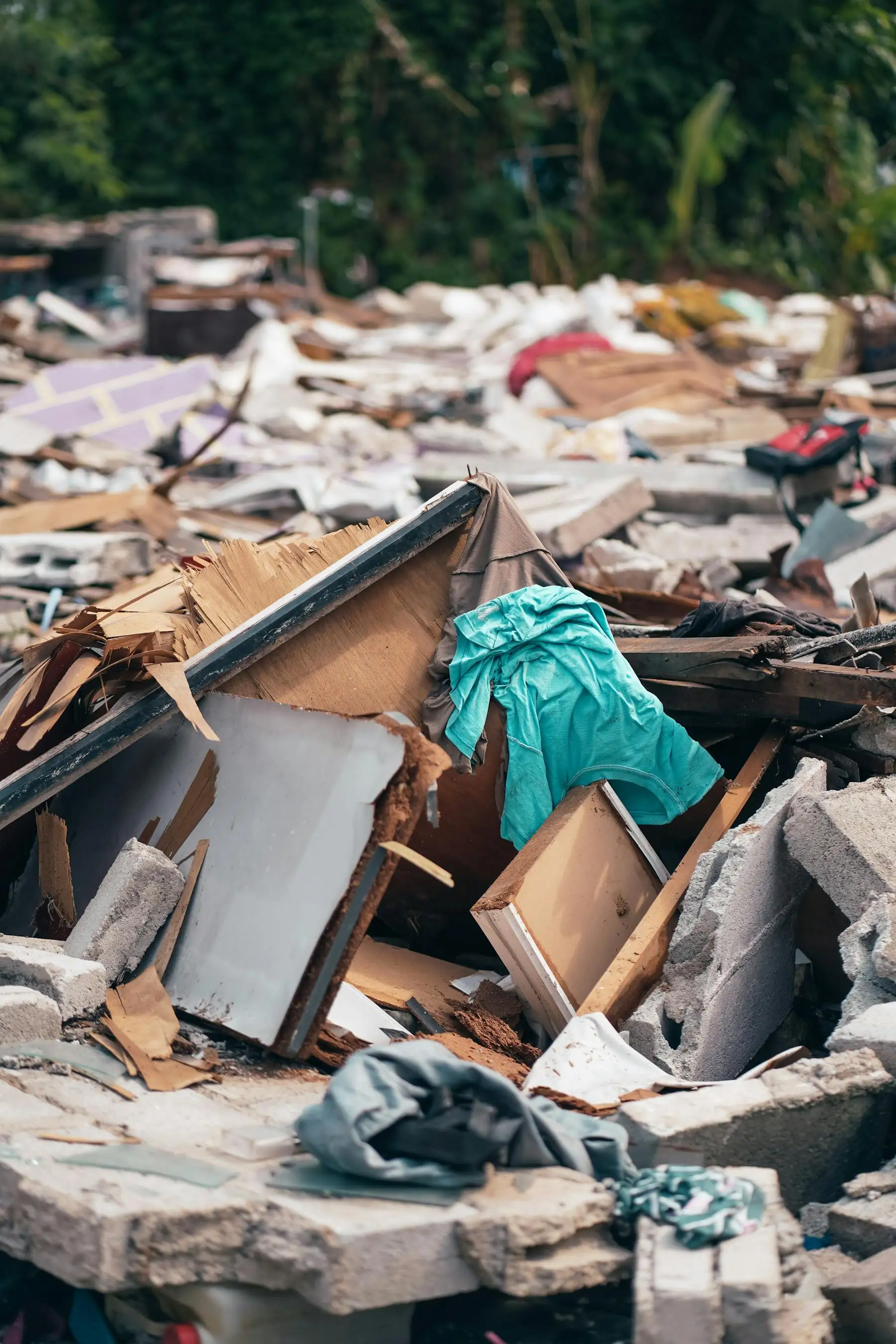
Water damage work in Florida is common, and the debris from it is not the same as ordinary demolition waste. Handling it as though it were creates problems.
Containment first
Material removed from a mold remediation is bagged and sealed before it leaves the containment area, not carried out loose. That is the whole point of the containment, and carrying open material through a house spreads spores through it.
- Heavy-duty bags, sealed, double-bagged where the guidance calls for it
- Removed through the shortest route to the outside
- Loaded directly rather than staged in a garage or a hallway
- Not opened, sorted or compacted after bagging
Weight
Saturated drywall, carpet and padding are dramatically heavier than the same material dry. A water-damage load hits a weight limit at a fraction of the volume, and planning for that avoids an overloaded trailer.
What goes and what stays
Porous material that has been wet for more than a short period generally does not recover. Drywall, insulation, carpet padding and particle board are removal items. Solid wood framing, tile and non-porous surfaces can frequently be dried and cleaned rather than removed.
That distinction matters for volume as much as for cost, and a remediation professional should be making it rather than a demolition crew.
What we can and cannot take
Bagged, non-hazardous water-damage debris is a normal load for us. Anything requiring licensed abatement — asbestos-containing material in particular — is not, and it needs a contractor licensed for it. If you are unsure what you have in an older house, test before demolition.
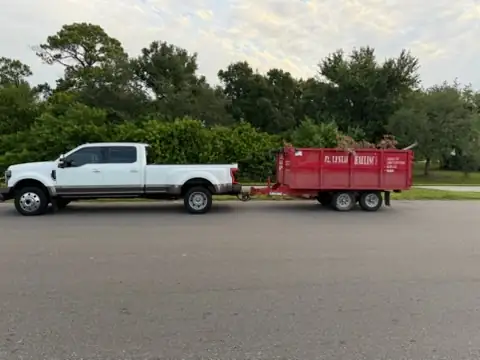
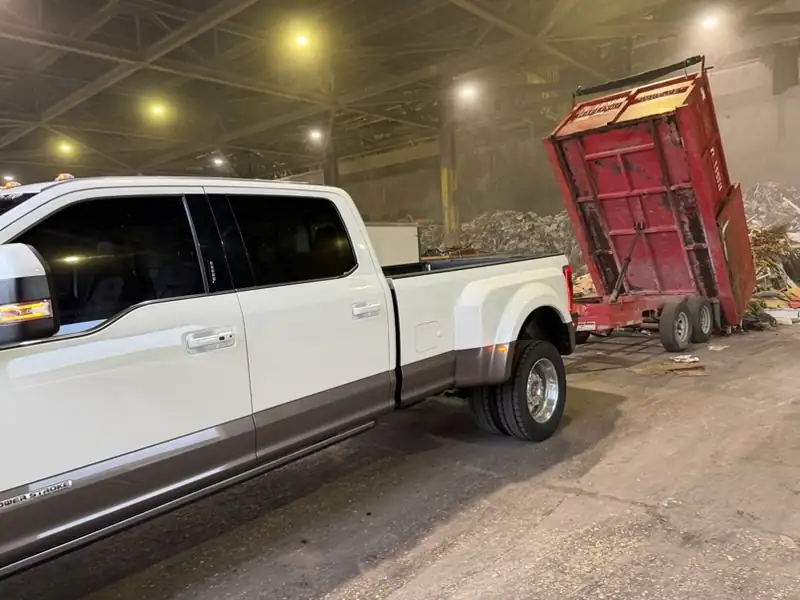
Book a 10-yard dump trailer
Free local delivery, free pickup, and a family-owned crew that shows up when we say we will. Serving Clearwater, Pinellas, Hillsborough and Pasco.