Nobody plans to hurt themselves loading a trailer, and yet a strained back, a nail through a shoe, or a cut hand is the most common way a weekend cleanout turns into a bad week. Every one of these is avoidable with a little preparation.
What to wear
- Leather or cut-resistant work gloves — not gardening gloves. Demolition debris, broken glass and old fasteners are what cut hands.
- Closed, thick-soled shoes. Boots are better. A nail through a running shoe is the classic cleanout injury.
- Long pants if you are handling anything with splinters, screen mesh or sharp edges.
- Eye protection when breaking things down, and a dust mask for drywall, insulation or anything from an attic.
Lifting
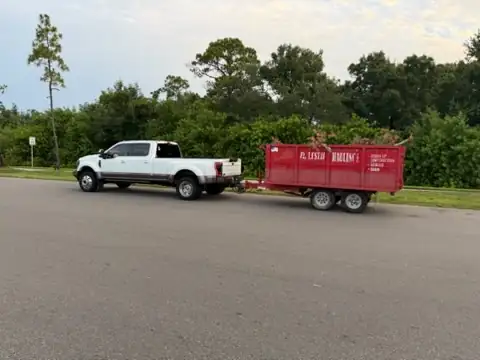
The trailer sides are 4 feet high. Lifting a heavy item over that rail is where backs go. A few rules make a real difference:
- 1Anything over about 50 pounds is a two-person lift. Ask for help rather than proving a point.
- 2Break heavy items down before lifting them. A dresser is four light lifts once the drawers are out.
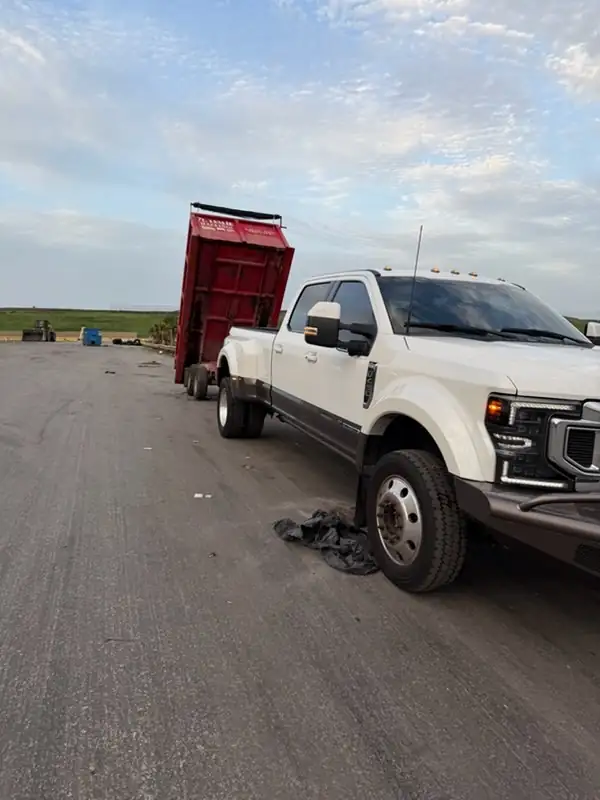
- 3Use the tailgate. Open it, walk heavy pieces in, and set them down on the floor instead of hoisting them over the side.
- 4Slide, roll or use a hand truck for appliances, stone and anything dense. Carrying is the last resort.
- 5Load heavy material first, while you are fresh, and leave the light bulky items for later in the day.
Working around the trailer
Keep the area around the trailer clear so nobody trips carrying a load. Pull nails from lumber or bend them over as you go, and keep a bucket for loose fasteners so they don't end up in the driveway. Never stand inside the trailer while someone else is throwing material in, and never climb on a stacked load to push it down.
When to stop and call us
If the job involves a hot tub, a piano, a cast-iron tub, a safe, or a pile of concrete, the honest question is whether loading it yourself is worth the risk. Our crew loads junk and debris at $48 per man-hour with a 4-hour minimum, and a single bulky item is a flat $89 pickup. Contact us for an estimate — a couple of hours of crew time is often cheaper than the alternative.
Set up the workspace before the first load
Most cleanout injuries happen in the last hour, when everyone is tired and the pile is nearly gone. Setting the job up properly at the start is what keeps the last hour safe.
- Stage material in a clear area between the house and the trailer so nobody is carrying loads through clutter
- Keep a hand truck, a pry bar, a reciprocating saw and a bucket for fasteners within reach of the trailer
- Have a tarp ready for the end of the day — a covered load stays dry, and a dry load is lighter and safer to move on pickup day
- Put water and shade where the crew will actually use them, not inside the house
- Agree who is loading and who is carrying so two people are not lifting the same piece from opposite ends without a plan
Pace the week. A weekly rental gives you seven days, and there is no prize for filling the trailer on the first afternoon. Spread the heavy work across mornings and leave the light bulky material for the evenings when it is cooler. The rental costs the same whether you finish Monday or Friday, and pickup is free the moment you call.
Frequently asked questions
Can I bring a helper who isn't on the booking?
Of course. Friends, family, a hired laborer — anyone can help you load. The person who booked is responsible for what goes in.
Is it safe to walk inside the trailer?
It's fine to step in to arrange a load, but keep your footing on a stable surface and never stand on loose debris. Get out before anyone else adds material.
What about kids?
Keep them well clear. A trailer full of sharp, heavy, unstable material is not a place for children, and the tailgate is heavy.
Book a 10-yard dump trailer
Free local delivery, free pickup, and a family-owned crew that shows up when we say we will. Serving Clearwater, Pinellas, Hillsborough and Pasco.