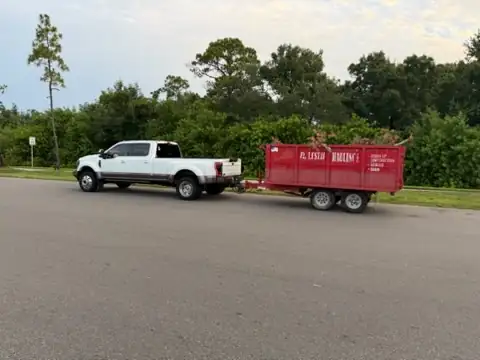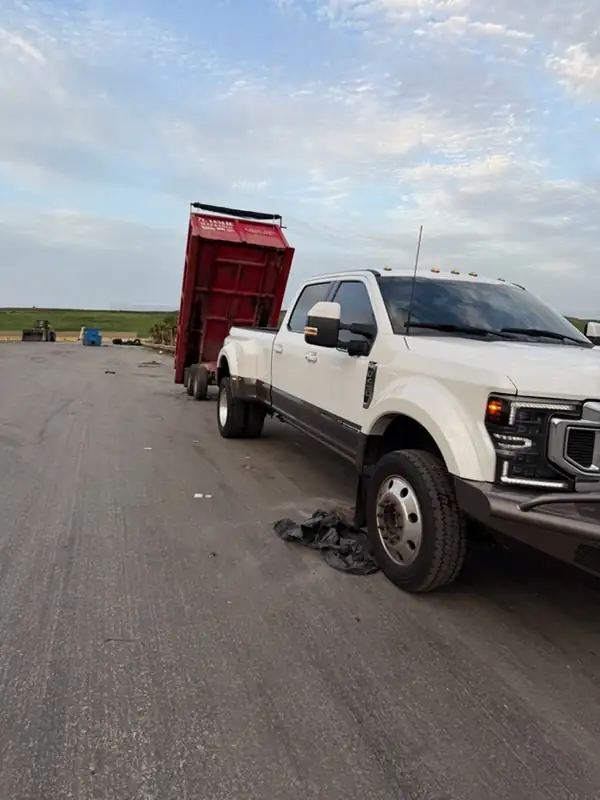
Loading a trailer well is not complicated and it makes a real difference — to how much fits, to how it tows, and to whether anything moves on the road.
Heavy first, low, and forward of centre
Weight distribution on a trailer determines tongue weight, and tongue weight determines whether it tows straight. Too much weight behind the axles makes a trailer sway; too much at the front overloads the hitch.
The practical rule is to put the heaviest material in first, spread across the floor, slightly forward of the axles. Then build up with lighter material.
Break material down
- 1Flatten every box and cardboard item.
- 2Cut long lumber and fencing down so it lies flat rather than bridging.
- 3Disassemble furniture where you reasonably can — a bed frame in pieces takes a fraction of the space.
- 4Remove drawers from cabinets and stack them.
- 5Snap or fold anything hollow so it does not hold air.
Breaking material down routinely doubles what fits in a load, and on a job that would otherwise need two trailers that is the whole saving.
Fill the corners and the voids
Loose loading leaves an enormous amount of air. Push smaller material into the gaps around and under larger items as you go rather than at the end, when it is too late to reach.
Do not load above the sides
Things that make it harder for everyone
- Nails and screws pointing up out of lumber — hazardous to load and to unload
- Anything liquid, which is not allowed and which makes a mess of a shared trailer
- Loose small material without anything containing it, which blows out in transit
- Loading only one end, which makes the trailer unsafe to move
A trailer loaded properly comes off the driveway and goes to the scale without incident. One loaded badly is a problem for the driver and frequently a second trip for you.
Book a 10-yard dump trailer
Free local delivery, free pickup, and a family-owned crew that shows up when we say we will. Serving Clearwater, Pinellas, Hillsborough and Pasco.