Most residential jobs need nothing more than a driveway and a plan. Some communities have rules, and finding out afterwards is the expensive way.
What HOAs typically restrict
- How many days a container or trailer may remain on a property
- Where it can sit — driveway only, not on the street, sometimes not visible from the street
- Whether prior notice or approval is required
- Hours during which delivery and pickup may happen
- Screening requirements in some stricter communities
Street placement usually needs permission
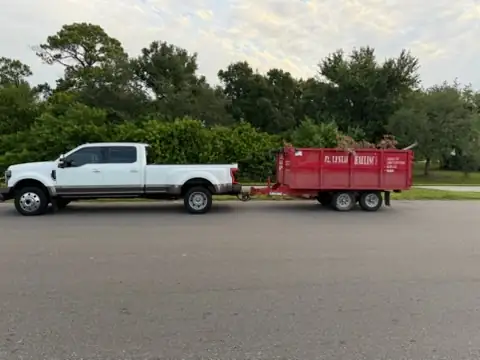
Placing anything in the public right of way is a different question from placing it on your own driveway, and most municipalities require a permit for it. Where a driveway placement is possible it avoids the issue entirely, which is one of the practical advantages of a trailer over a roll-off — a trailer fits driveways that a roll-off cannot.
Demolition and permits
The trailer itself rarely needs a permit on private property. The work might. Structural demolition, removing load-bearing elements, pool demolition and some interior work require permits in Pinellas, Hillsborough and Pasco, and the requirements differ between them.
Check with your local building department before starting rather than partway through. Unpermitted demolition becomes a real problem at resale and occasionally during the work itself.
Older homes
Anything built before the late 1970s may contain asbestos in flooring, adhesives, insulation or texture coatings. That is a licensed abatement matter and it does not go in a general debris load. Testing before demolition on an older property is worth doing rather than assuming.
Book a 10-yard dump trailer
Free local delivery, free pickup, and a family-owned crew that shows up when we say we will. Serving Clearwater, Pinellas, Hillsborough and Pasco.