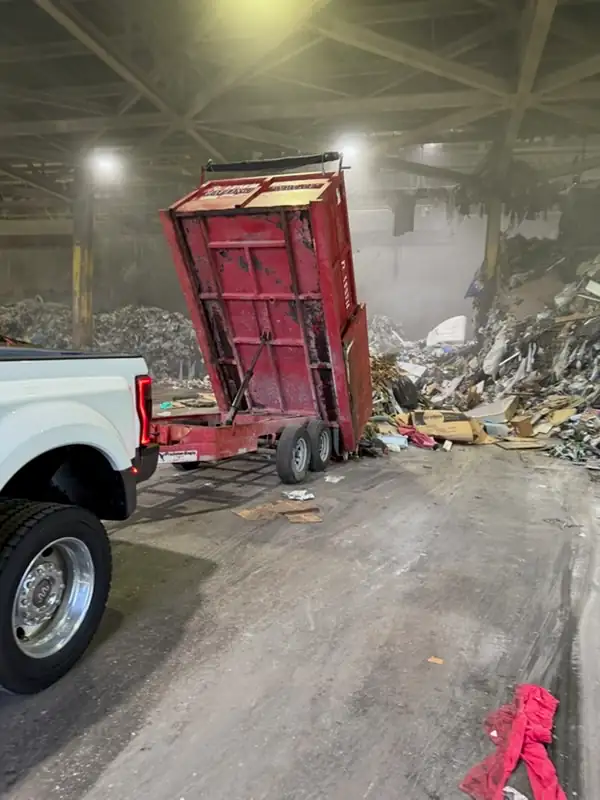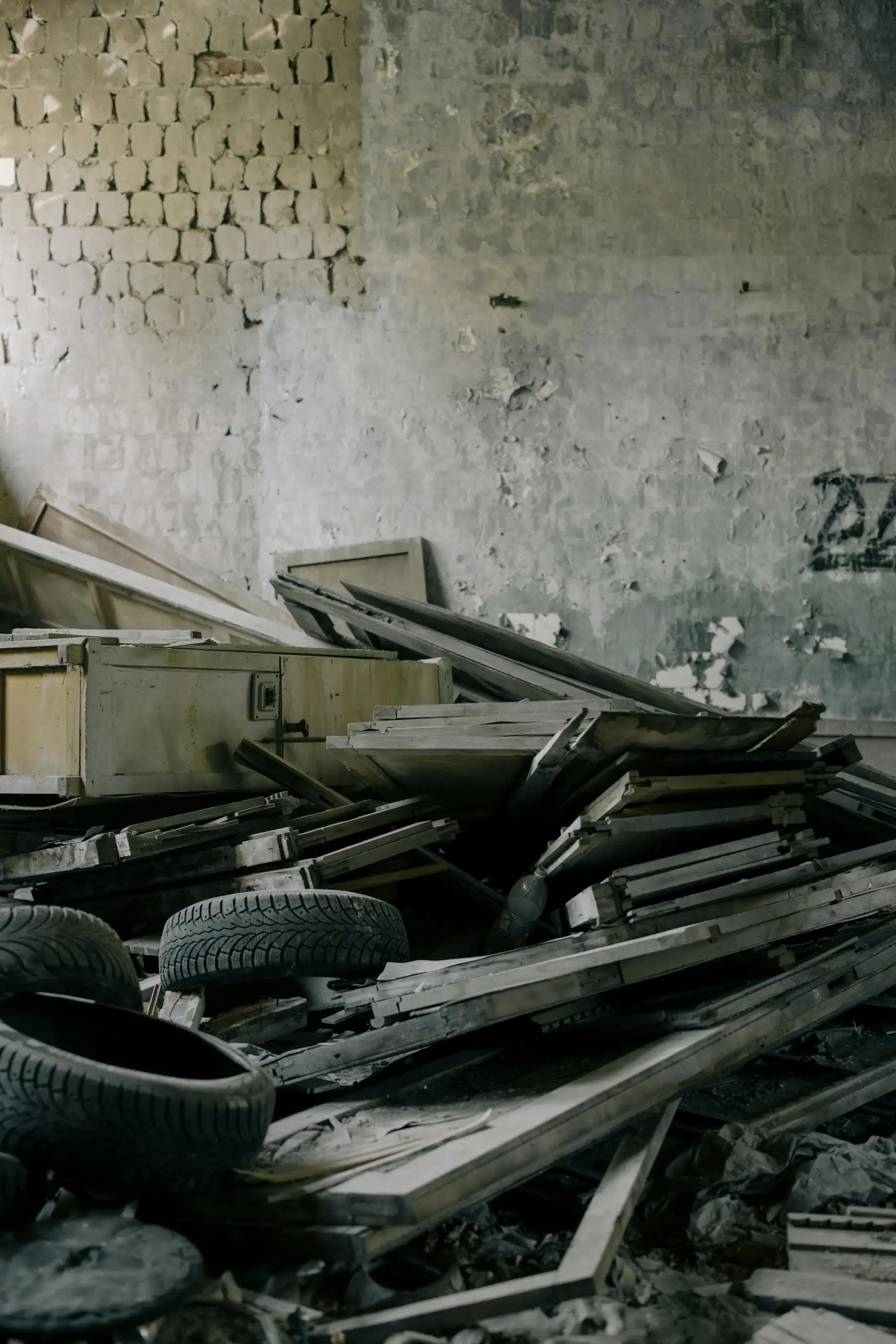
Flooring removal is one of the most common reasons people rent a trailer, and the three main materials could not be more different in what they demand.
Carpet — volume, not weight
Light, bulky and easy. Cut it into strips you can roll, tie the rolls, and stack them lengthwise in the tub.
A 10-yard trailer takes roughly 1,500 to 2,500 square feet of carpet and pad if it is cut and rolled. Thrown in as whole-room sheets, far less. Our dedicated carpet guide covers the technique.
The catch in Florida is moisture. Old carpet holds humidity and anything that has been wet is dramatically heavier.
Tile — weight, not volume
The opposite problem entirely. Tile plus the mortar bed under it is dense, and the debris is sharp, awkward and heavy.
- **Keep it shallow.** A layer on the trailer floor, spread evenly. Do not fill the tub.
- **The mortar comes too.** Often more weight than the tile itself, especially over a mud bed.
- **It is sharp.** Gloves, boots and eye protection, and bag the fines rather than sweeping them into the wind.
- **Underlayment and backer board** add to the load — cement board is heavy in its own right.
A tile tear-out across a whole house is frequently a multi-load job on weight alone, even though the trailer never looks full. That surprises people every time.
Hardwood and engineered — in between
Solid hardwood is heavier than carpet and lighter than tile, and it packs reasonably once it is up.
- Nail-down flooring comes up in strips that stack well
- Glued-down engineered wood is more stubborn and brings adhesive with it
- Old hardwood is dense and heavier than new engineered product
- Watch for the nails and staples — hundreds of them, and they end up in tires
Reclaimed hardwood in good condition has genuine value. Worth a moment's thought before it goes in the trailer.
Laminate and vinyl plank
The easiest of all. Light, and floating floors lift in whole planks that stack flat. Glued-down vinyl is more work and brings adhesive.
What else goes in the load
It is never only the flooring:
- **Baseboard and shoe molding**, which usually comes off on a flooring change
- **Transition strips and thresholds**
- **Tack strip and staples** — bag these
- **Underlayment**, which on some installations is substantial
- **Subfloor**, if any of it is damaged
- **The appliances or fixtures** that had to come out for access
Sequencing a whole-house job
- 1Empty the rooms completely
- 2Remove baseboard if it is being replaced
- 3Start with the heaviest material and load it flat on the trailer floor while the tub is empty
- 4Follow with lighter, bulkier material on top
- 5Bag fines and sharp debris as you go rather than at the end
- 6Sweep and inspect the subfloor before anything new arrives
Doing it in stages
On a big job it is often better to do the heavy material first as its own load, then the light material. That way the weight limit does not strand you with a half-empty trailer you cannot add to.
Sizing it
Tell us the square footage and the material and we will tell you honestly how many loads. Tile especially is worth asking about before you assume one trailer covers it. Call (727) 779-8919.
Book a 10-yard dump trailer
Free local delivery, free pickup, and a family-owned crew that shows up when we say we will. Serving Clearwater, Pinellas, Hillsborough and Pasco.