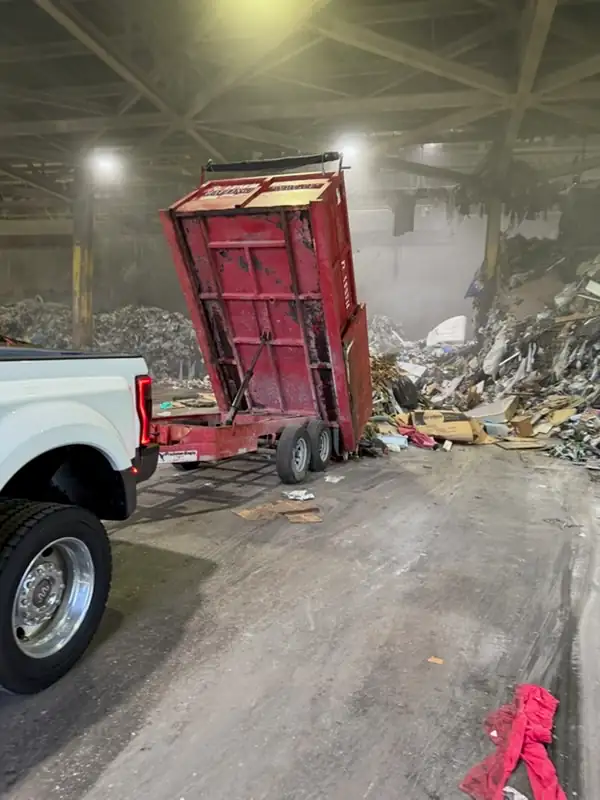
Fence replacement has one constraint most demolition jobs do not: for a period, the yard is open. If there are dogs, a pool or small children, that shapes the entire sequence.
Plan the open period first
- **Do not remove more than you can replace** in the same working window if the yard must stay secure.
- **Work in sections** — remove a run, set the new posts, move on.
- **Temporary fencing** for the gap, if the yard has to stay contained.
- **Pool safety barriers** are a legal requirement in Florida, and removing a section of pool barrier fence changes your obligations immediately. Plan this properly.
- **Tell the neighbors** on a shared line, particularly if a dog is involved on either side.
Locate before you dig
New posts mean digging, and dig safety is not optional. Call 811 before you start — it is free and it is the law.
Also worth checking privately: irrigation lines, low-voltage lighting, invisible pet fence wire and septic components. Utility locates cover public utilities, not the sprinkler system you installed.
Property lines
Fence replacement is when boundary disputes surface. If there is any doubt where the line runs, find out before the posts come out — the old fence is not necessarily on the line, and rebuilding in the same place perpetuates an error.
Check your HOA covenants too. Many Tampa Bay communities specify fence height, material, color and which side faces out.
Removal sequence
- 1Remove gates and hardware first
- 2Take panels or pickets and rails off, working section by section
- 3Stack panels flat as you go rather than leaning them everywhere
- 4Pull posts — a jack, a chain and a bumper jack, or a post puller
- 5Deal with the footings
- 6Rake and magnet-sweep the line for nails and screws
The footings
The heaviest part of the job and the decision that changes the load.
**Pull them** if the new fence needs different post positions, or if the line is changing.
**Leave them** if the new posts can use the same locations and the concrete is sound — though most contractors prefer fresh holes.
Pulled footings are concrete and they are heavy. Flat on the trailer floor, spread out, shallow layer. A fence line's worth of footings alone can approach a weight limit. Our guide on concrete, brick and dirt weight limits has the numbers.
How much it fills
Broken down and stacked:
- **Wood privacy fence** — roughly 100 to 150 linear feet per 10-yard trailer
- **Vinyl** — similar or slightly more, being lighter
- **Chain link** — rolled tightly, a substantial run plus posts and top rail
Add footings and the limit becomes weight rather than volume. Our fence volume guide goes further.
Scrap value
Chain link fabric, posts, top rail and aluminum fencing are all scrap metal. On a long run that is worth separating and taking to a scrap yard rather than paying to dispose of.
Nails and screws
A fence line contains thousands of fasteners and plenty end up in the grass. Run a magnet sweeper down the line at the end. It saves tires, feet and mower blades.
Size it before you start
Tell us the linear footage, the material, and whether the footings are coming out. Call (727) 779-8919.
Book a 10-yard dump trailer
Free local delivery, free pickup, and a family-owned crew that shows up when we say we will. Serving Clearwater, Pinellas, Hillsborough and Pasco.