Flooding in a low-lying coastal county is not a plumbing leak. Storm surge and floodwater carry sewage, chemicals, and whatever was in the street, and the materials it soaks into do not dry out and go back to normal. In a Florida summer, the clock on mold starts almost immediately — porous material that stays wet becomes a health problem in a matter of days, not weeks.
So there is real urgency here. But there is one thing that has to happen before the urgency takes over, and it is the same thing every adjuster will ask about later.
Document everything before a single thing leaves
Once a soaked sofa is on the curb, it is trash. It stops being a documented loss. Before you carry anything out of the house:
- 1Photograph and video every room, wide and close. Get the waterline on the walls with a tape measure in the frame so the height is unambiguous.
- 2Photograph serial and model numbers on appliances, HVAC equipment, the water heater, the washer and dryer, electronics, and tools.
- 3Build a written inventory as you go: item, rough age, rough replacement cost. Photos plus a list beats photos alone.
- 4Photograph the contents of cabinets, closets, and the garage before you empty them.
- 5Save every receipt — the trailer rental, the fans, the dehumidifier, the contractor, all of it.
Open the claim early, keep a log of who you spoke with and when, and do not let anyone convince you to skip the paperwork because they are ready to start demo today. It is your claim, not theirs.
What comes back and what does not
The hard truth about floodwater is that porous materials generally do not recover. You can dry them, you can bleach them, and they will still hold contamination and grow mold behind the surface. The practical rule: if it soaks up water and you cannot fully clean and dry the inside of it, it goes.
Generally does not come back
- Drywall and the insulation behind it — wet insulation holds water against the studs for weeks.
- Carpet and, especially, carpet pad. The pad is a sponge and it is never worth saving after floodwater.
- Particleboard and MDF cabinetry, vanities, and furniture. It swells, delaminates, and wicks water upward.
- Upholstered furniture and mattresses.
- Laminate flooring and most engineered wood after prolonged submersion.
- Cardboard, books, paper, and anything stored in cardboard boxes in the garage.
Often salvageable
- Solid wood framing and studs, once dried thoroughly and treated.
- Tile and concrete, though what is under the tile matters — a wet subfloor or wet mortar bed can still be a problem.
- Solid wood furniture, if it can be cleaned and dried properly.
- Metal, glass, and hard plastics that can be washed and disinfected.
Appliances and HVAC equipment that were submerged should be evaluated, not assumed. Do not just plug things back in because they look fine.
The flood cut
The standard remediation practice is a flood cut: remove the drywall well above the waterline rather than right at it. Water wicks upward through drywall and insulation, so the visible line is not the true line. Cutting to a clean height above it gives you a straight, easy line to patch later and gets the wet insulation out where it cannot rot the framing.
- 1Kill power to the affected circuits at the panel before you open any wall.
- 2Mark a level line well above the highest water mark, and cut to a consistent height across the room so the repair is a clean horizontal seam.
- 3Watch for wiring, plumbing, and low-voltage runs inside the cavity. Score, do not blindly saw.
- 4Pull all the wet insulation out of the open cavities. If it is wet, it goes — no exceptions.
- 5Remove baseboards, wet trim, and the bottom of any wet cabinetry. Do not leave a wet cabinet box installed against dry new drywall.
- 6Pull carpet and pad. Roll and bag it — it is a mess and it will be dripping.
- 7Open the cavities to air, then run fans and dehumidifiers until the framing is genuinely dry, not just dry to the touch.
Wear a respirator, gloves, and eye protection. Mold spores and contaminated dust are exactly what you do not want to be breathing while you work in a hot, closed-up house.
Hauling it out: wet debris is heavy
This surprises people every single time. Water-soaked drywall, carpet, pad, and insulation weigh dramatically more than the same materials dry. A room's worth of gutted material that would be light as a feather in a demo on a dry house can be brutally heavy after a flood. This is the classic way people blow straight through a weight allowance.
- Load heavy wet material low and centered over the axles — do not build a pile at the tail of the trailer.
- Keep the load spread front to back and level with the top rail so it can be tarped.
- Expect to reach your tonnage before you reach your volume. Overage is billed per ton, and we provide a certified scale receipt so you can see exactly what the load weighed.
- Keep hazardous material out: fuel, pool chemicals, paint, propane cylinders, and free-flowing liquids do not go in the trailer.
- Keep vegetative debris separate from the construction and household stream if you are also using a county debris program — mixing them can get a curb pile skipped entirely.
One more caution specific to storm weeks: be wary of anyone who shows up at a flooded house offering to handle everything. Check licensing, do not hand over large deposits to strangers, and never sign away your insurance benefits to someone you met at your curb.
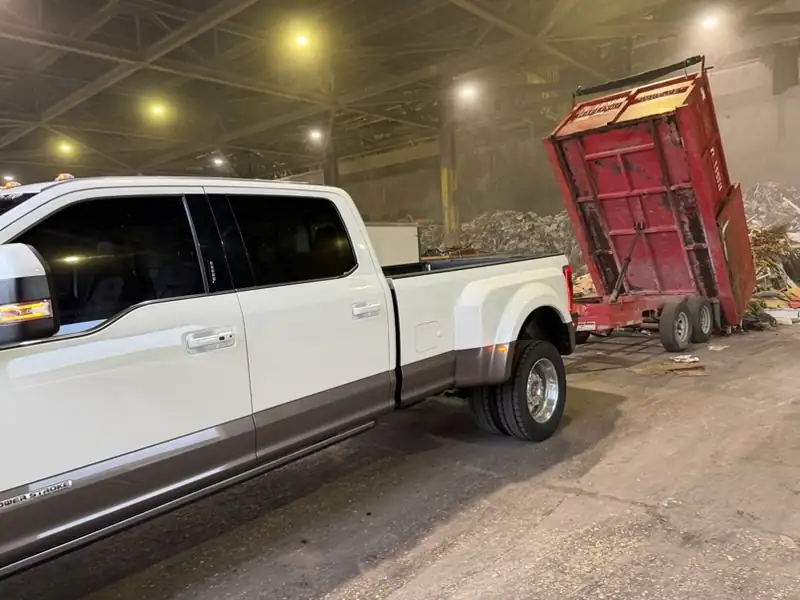
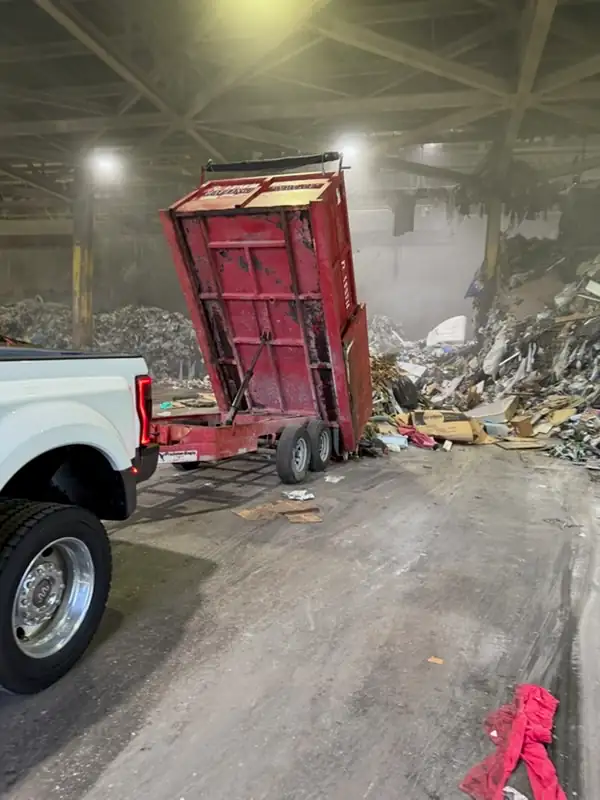
If you are gutting a flooded home anywhere in Pinellas, Hillsborough or Pasco, we will put a 10-yard dump trailer in your driveway so you can work at your own pace instead of racing a curbside pickup schedule. Free local delivery and pickup, book online at robertlesliehauling.com, or call (727) 779-8919 — and if you would rather not carry it out yourself, ask about our full-service option where our crew does the loading.
Book a 10-yard dump trailer
Free local delivery, free pickup, and a family-owned crew that shows up when we say we will. Serving Clearwater, Pinellas, Hillsborough and Pasco.