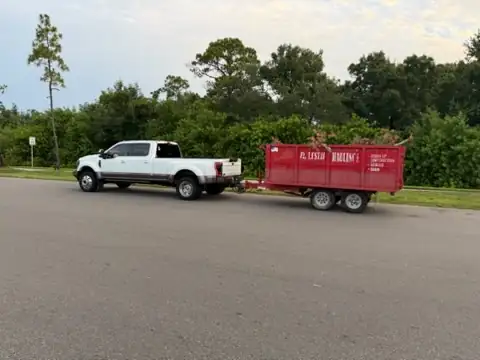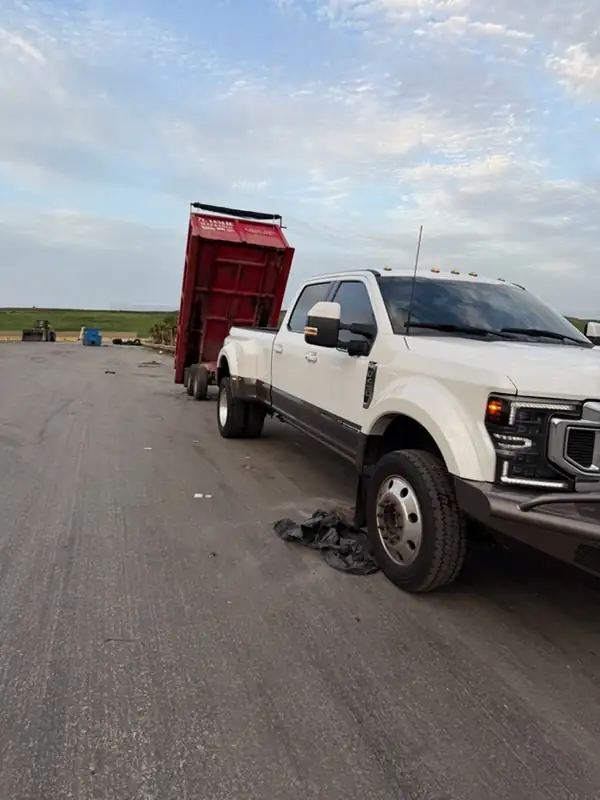
A dump trailer is far kinder to a driveway than a roll-off dumpster, because it arrives on wheels rather than being dragged off a truck on steel rollers. That does not mean it needs no thought at all, particularly on pavers or on asphalt in Florida heat.
Where the load actually sits
A loaded trailer concentrates weight on the tyres and, when parked, on the jack. Tyres spread load reasonably well; a jack foot does not, and a jack sitting directly on pavers or on hot asphalt is where marks come from.
Simple protection
- A board or a purpose-made pad under the jack foot. This is the single most effective thing and it costs almost nothing.
- Plywood under the tyres on pavers or stamped concrete, particularly if the trailer will sit for several days.
- Avoid parking on asphalt in the hottest part of a Florida afternoon if the trailer will be loaded and stationary for a week.
- Keep the trailer off any area with known drainage or settlement problems.
Turning and manoeuvring
More marks come from turning a loaded trailer on a driveway than from it sitting there. Scuffing happens when tyres pivot in place. Placing the trailer where it can be pulled straight out rather than turned is worth planning for.
Soft ground
After heavy rain, ground that looks fine will not carry a loaded trailer. Ruts in a lawn are a genuine risk and they take a season to grow out. If it has been raining, a driveway placement rather than a yard placement is the right call.
Slope
A steep driveway changes both placement and safety. A trailer on a slope needs chocking properly, and a loaded tub tilting on a slope behaves differently from one on the level. We will look at it before deciding where it goes.
Book a 10-yard dump trailer
Free local delivery, free pickup, and a family-owned crew that shows up when we say we will. Serving Clearwater, Pinellas, Hillsborough and Pasco.