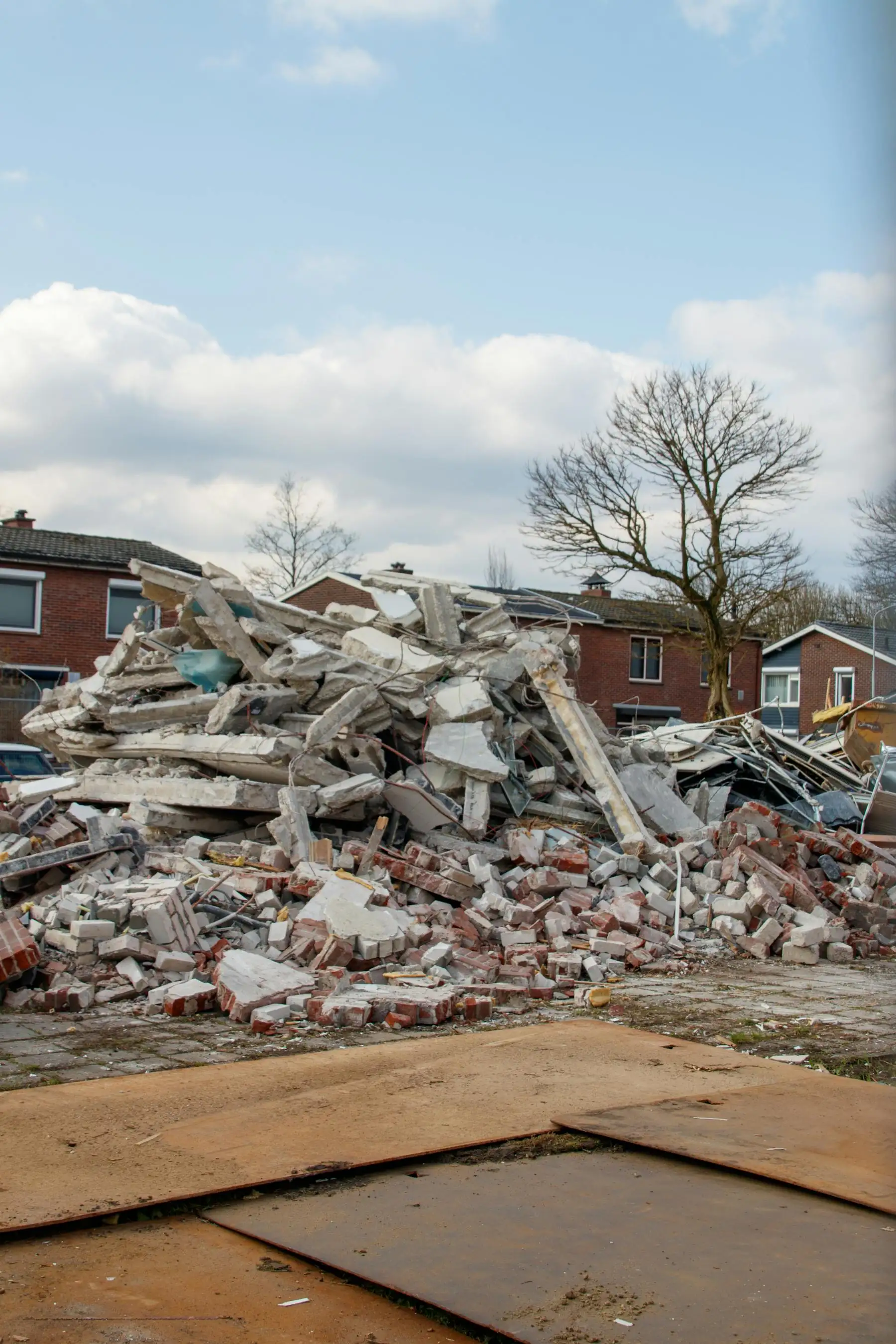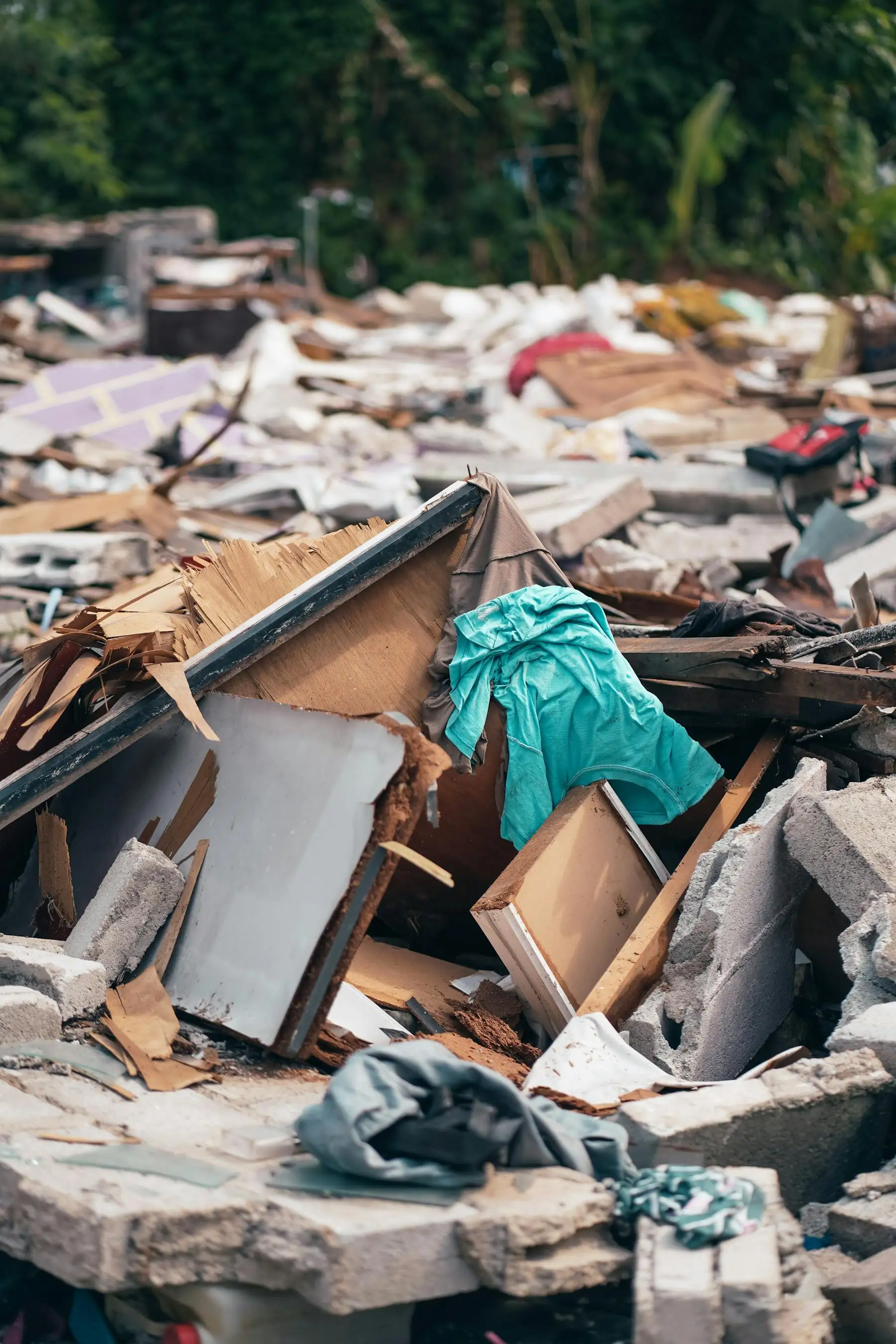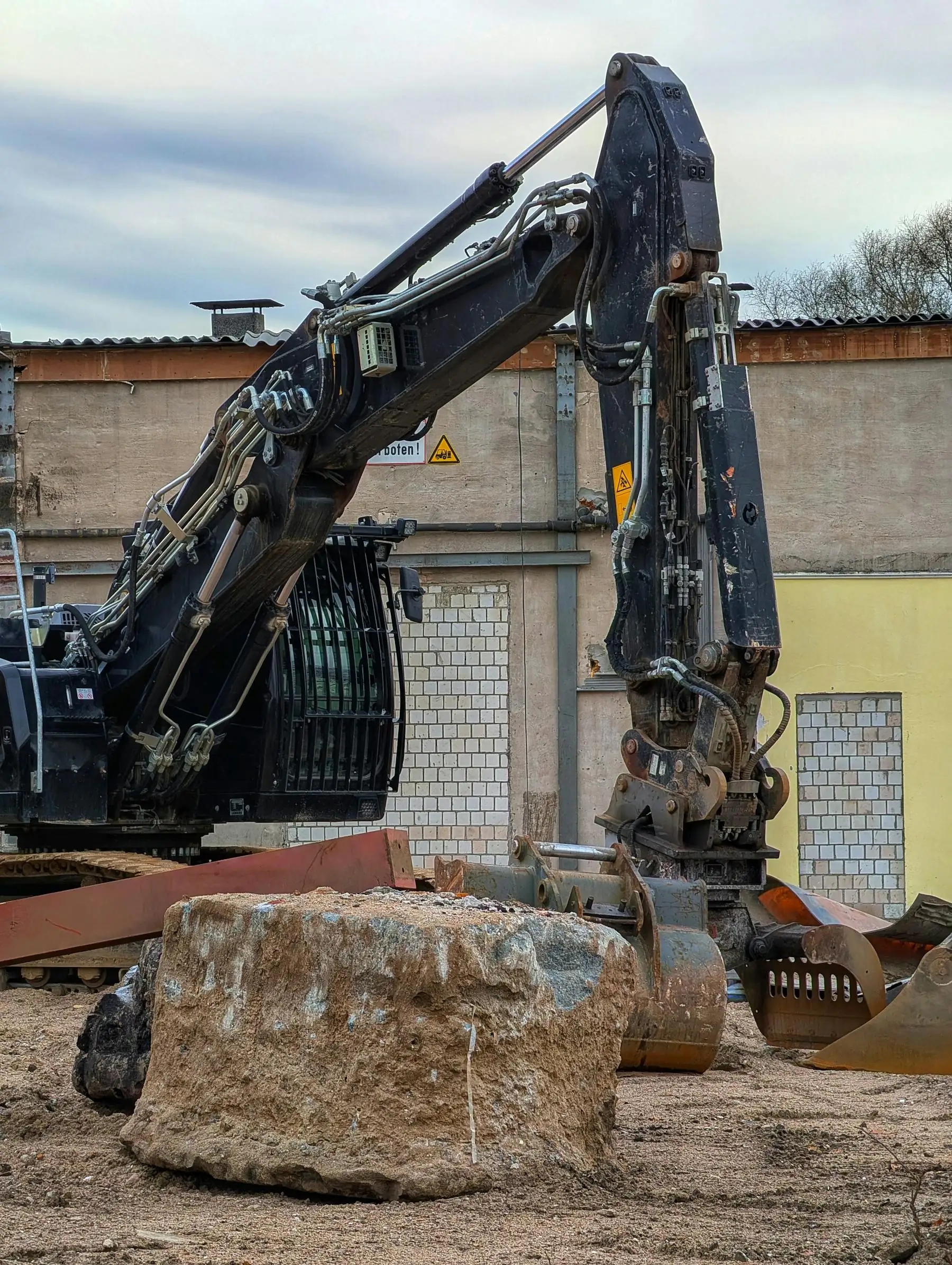
This is the post that saves people the most trouble, so we will lead with the punchline: if you are hauling concrete, brick, block, dirt, sod, gravel, tile or stone, the trailer is going to be full long before it looks full. The load will sit low, there will be daylight between the debris and the top rail, and it will still be everything the trailer can safely and legally carry.
That gap between what looks full and what is full is where people get in trouble — and it is exactly why heavy material on our trailers is limited to roughly five yards per load. Not because we are being cautious for the fun of it, but because the arithmetic below is unforgiving.
The numbers that make heavy debris different
Approximate weights per cubic yard. These vary with moisture, aggregate and how broken up the material is, so treat them as ranges rather than gospel.
- Broken concrete: roughly 2,000 to 2,700 pounds per cubic yard, depending on how finely it is broken and how much rebar and void space is mixed in. Call it well over a ton per yard.
- Brick and concrete block, broken: roughly 2,000 to 2,600 pounds per cubic yard.
- Dry dirt or fill: roughly 2,000 to 2,300 pounds per cubic yard.
- Wet dirt, or dirt after a Florida afternoon storm: often 2,500 to 3,000-plus pounds per cubic yard. Water is enormously heavy and dirt holds a lot of it.
- Sod, with soil still attached: heavy and wet by definition. Freshly cut sod is one of the most underestimated materials we haul.
- Gravel, shell and crushed stone: roughly 2,400 to 2,900 pounds per cubic yard.
- Ceramic and porcelain tile with mortar attached: dense enough to treat as heavy debris rather than remodeling debris.
- Asphalt millings and broken asphalt: heavy, and heavier still when warm and compacting under its own weight.
Now do the multiplication that everyone skips. Five cubic yards of broken concrete at a conservative 2,300 pounds per yard is 11,500 pounds. That is well north of five tons of material sitting in a box that is only half full. Ten yards of the same material would be over ten tons — a load that no half-ton pickup, no reasonable trailer and no sane person should be pulling down Gulf-to-Bay Boulevard.
How to estimate what you actually have
Heavy debris is one of the few materials you can estimate accurately, because it usually starts as a regular geometric shape. Measure it before you break it.
- 1Measure length, width and thickness in feet. For a 4-inch slab, thickness is 0.33 feet. For a 6-inch slab, it is 0.5 feet.
- 2Multiply the three together to get cubic feet.
- 3Divide by 27 to get cubic yards.
- 4Add roughly 20 to 30 percent, because broken concrete does not stack — the chunks trap air and take more volume than the intact slab did.
- 5Compare the result to the five-yard heavy cap and to your tonnage allowance, and count your loads.
Worked example, because this is the one people ask about. A 10 by 20 foot patio slab, 4 inches thick: 10 times 20 times 0.33 is about 66 cubic feet, divided by 27 gives roughly 2.4 cubic yards intact. Break it up and it fluffs to maybe 3 cubic yards. At around 2,300 pounds per yard, that is somewhere in the range of 5,500 to 7,000 pounds. That is a real load — but a very common single-trailer job, and one we run all over Clearwater and Largo.
Now double the patio. A 20 by 20 slab at 4 inches is roughly 5 cubic yards intact, more like 6 broken. That is over the heavy cap, and it is over what a single load should carry. Two loads. And that is a small patio.
Common heavy jobs and honest expectations
- Small patio or walkway removal (under about 200 square feet at 4 inches): usually fits one load, comfortably within the heavy-material limit.
- Driveway removal, standard two-car driveway: almost always multiple loads. A driveway is a lot of square footage and it is usually thicker than a patio.
- Pool deck demo: typically multiple loads, and often heavier than expected because of the mortar bed and pavers.
- Removing a raised bed or a few yards of fill dirt from a Safety Harbor or Palm Harbor yard: sizeable, and if it is wet, plan conservatively.
- Old brick planter or block wall: measure the volume, then remember that mortar comes with it and adds weight.
- Tile floor tear-out across a whole house: dense enough that it belongs in this category, not the remodel category. The mortar bed is what gets you.
Loading heavy material correctly
- Spread it. Distribute concrete and dirt evenly across the trailer floor rather than piling it at the tail or in one corner. A concentrated heavy load is unstable to tow and puts everything in the wrong place.
- Load a little forward of center. Weight too far back makes a trailer sway; weight too far forward overloads the hitch. Even and slightly forward is the goal.
- Keep it low. You do not need to reach the rail, and on a heavy load you will not. That is correct and expected.
- Keep it clean. Concrete and brick without rebar, dirt without trash — clean loads are easier to dispose of. If your concrete has rebar in it, or your dirt is full of roots and buried junk, tell us in advance.
- No liquids, ever. Wet slurry, leftover mixed mortar and standing water in a bucket cannot ride.
Why the scale receipt matters more here than anywhere else
On a furniture cleanout, weight is an afterthought. On a concrete job it is the whole ballgame. Your rental includes a set tonnage allowance with overage billed per ton, and on heavy material that allowance is the number that governs your job. We provide a certified scale receipt when weight matters, which means you are not taking anybody's word for what came off the trailer — including ours. You get the ticket, you see the tonnage, the math is the math.
That transparency is exactly why we would rather have a five-minute conversation about your slab dimensions before we deliver than a difficult one after we weigh. Measure it, call it in, and let us plan the loads properly.
Breaking up a slab or moving dirt anywhere in Pinellas, Hillsborough or Pasco? Book a 10-yard dump trailer at robertlesliehauling.com, or call (727) 779-8919 with your measurements first — we will run the weight math with you and tell you exactly how many loads the job really takes.
Book a 10-yard dump trailer
Free local delivery, free pickup, and a family-owned crew that shows up when we say we will. Serving Clearwater, Pinellas, Hillsborough and Pasco.