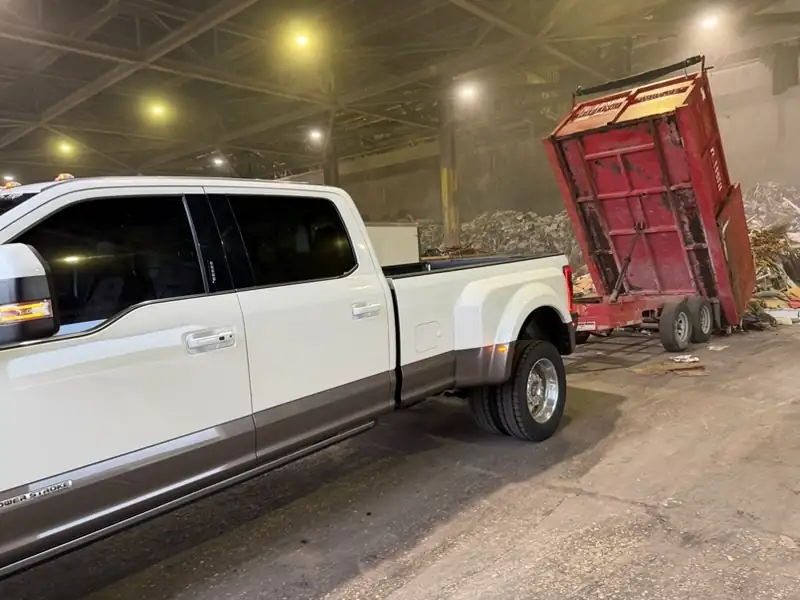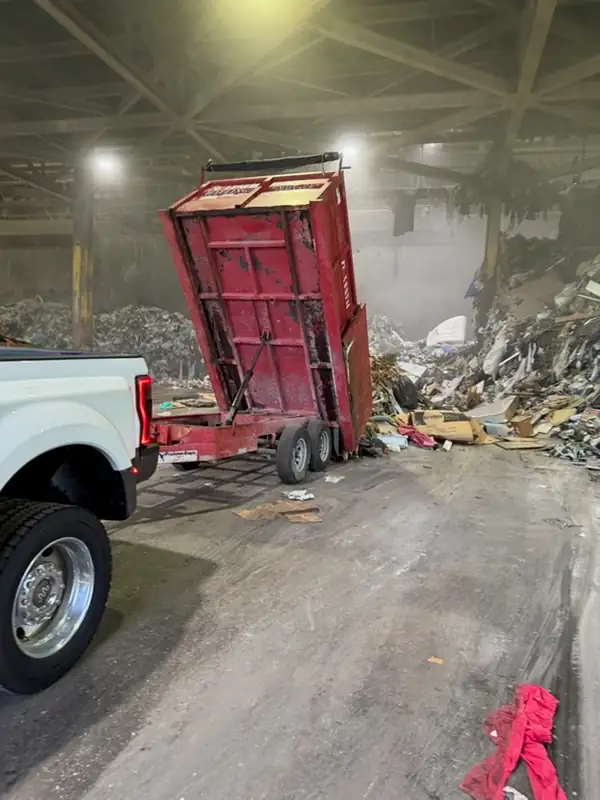
Every pool builder, fence company and shed installer in Pinellas, Hillsborough and Pasco says the same thing in the contract: the site must be clear before the crew arrives. What that means in practice is that the old shed, the fence that's coming out, the overgrown corner, the play equipment and whatever has been stacked behind the garage all have to go — and usually in the same week. A 10-yard trailer for that week is the tool for the job.
Walk the site with the contractor first
Before you take anything out, get the contractor to mark exactly what needs to be clear: the footprint, the access path for their equipment, and anywhere they'll stage material. Pools in particular need a wide equipment path, often through a fence line, and the fence panels along that path come out whether they're being replaced or not. Knowing the plan means you clear what's needed and don't touch what isn't.
- Mark the footprint and the equipment path with paint or flags
- Ask what the crew will haul themselves — pool builders typically take their own excavation spoils, fence companies often leave the old fence
- Confirm utility locates have been called in before anything is dug
- Find out if the contractor wants the trailer on site during their work too, and where it can sit without blocking them
What comes out
The old fence
Wood fence panels stack flat and load fast; posts come with a concrete footing on the bottom that is heavy and awkward. Cut the post at the footing and leave the concrete in the ground if the new fence goes elsewhere, or dig them and treat them as heavy material on the trailer floor. Chain link is scrap metal — roll the fabric, bundle the posts, keep them out of the general load. Vinyl fence is light, bulky general debris.
The old shed
Empty it first and sort the contents, because sheds hold paint, fuel, chemicals and propane that can't go in the trailer. Then take it down in the order it went up: doors, roof panels, walls, floor. A metal shed is scrap. A wooden or resin shed is general debris. The floor may sit on a concrete pad or blocks — heavy material.
Brush, trees and stumps
Trimmings, palm fronds and small trees are light and bulky — cut them short and stack them tight or they'll fill the trailer with air. Stumps are the exception. A ground stump with its root ball carries a lot of soil and is heavy; count it as heavy material and keep it low. Large stumps are often better ground in place by a tree service than hauled.
Loading order for a mixed yard load
- 1Concrete footings, pad pieces, sod and stumps first — flat on the floor, spread wide, stop at 5 yards.
- 2Fence panels and shed lumber flat on top of that.
- 3Vinyl, resin and plastic pieces along the sides.
- 4Brush and fronds last, cut short and packed down.
- 5Metal — chain link, shed panels, old swing set — in a separate pile beside the trailer.
Timing it
Book the trailer for the week before the build date, load through the week, and call for free pickup the day before the crew arrives so the driveway is open for their equipment. If the contractor wants a trailer on site during the build for their own debris, that's a second rental — the weekly rate is $375 and the 28-day rate is $795 for a longer project, each with one ton included.
Frequently asked questions
Can the pool builder use my trailer?
If you've agreed it with them, yes — but the rental is in your name and any extra weight from their material is on your invoice. Most builders haul their own excavation spoils separately; confirm that in the contract.
How much fence fits in one load?
A typical backyard's worth of wood fence panels, stacked flat, fits in one load with room for the shed. The footings are the part to plan around.
Do you clear lots as a service?
Our crew clears yards, sheds and fence lines at $48 per man-hour with a 4-hour minimum. Send photos of the site for an estimate.
Book a 10-yard dump trailer
Free local delivery, free pickup, and a family-owned crew that shows up when we say we will. Serving Clearwater, Pinellas, Hillsborough and Pasco.