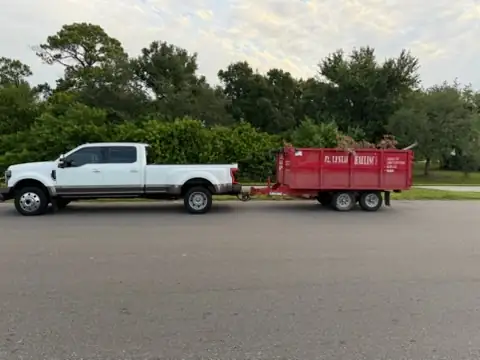
When the trailer pulls out of your driveway in Clearwater, most people stop thinking about the pile. It is gone, the project is done, and that is the whole point of renting a dump trailer in the first place.
But the second half of the job is where all the rules you have been reading about come from — the prohibited items, the tonnage allowance, the five-yard cap on concrete, the reason we ask what is in the load before we deliver. All of it traces back to what happens at the other end. Here is the actual journey.
Step one: the load gets tarped and secured
Before the trailer moves an inch, the load has to be covered and secured. This is a legal transport requirement across Florida, and it is a serious one — unsecured debris on the highway is how a roofing nail ends up in someone's tire on Alt 19 and how a sheet of loose plywood becomes a projectile.
It is also the reason we care so much about load height. A pile heaped above the top rail cannot be tarped, and a load that cannot be tarped cannot legally leave your property. Everything else about how a trailer gets loaded flows from this one physical fact.
Step two: the scale
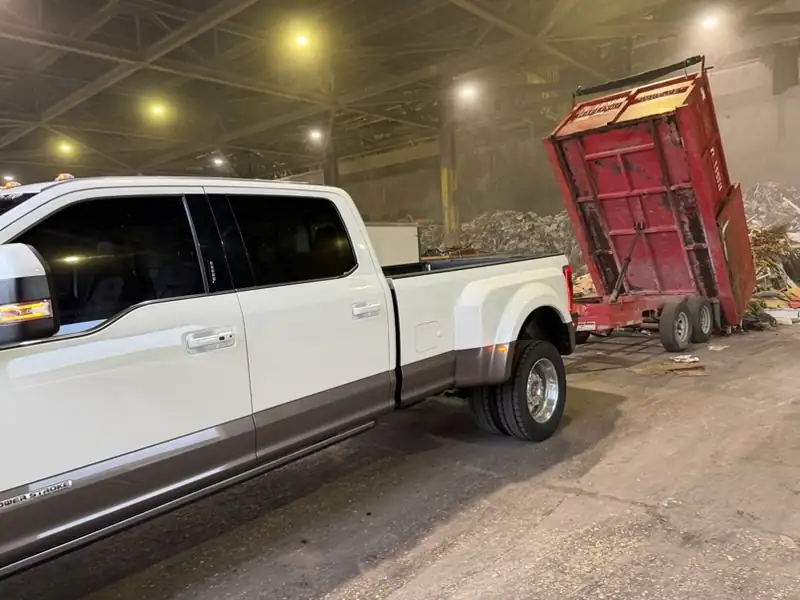
Loads are weighed on a certified scale on the way in. The truck and trailer cross loaded, dump, and cross again empty — the difference is your material, measured, not estimated.
That number is what your rental's tonnage allowance is measured against, and it is what any per-ton overage is calculated from. When weight matters to a job, we provide the certified scale receipt so you can see the real figure rather than take anyone's word for it. It also explains the five-yard cap on heavy material like concrete, dirt and rock: the trailer runs out of legal weight long before the box runs out of space, and the scale is where that becomes undeniable.
Step three: the sort line
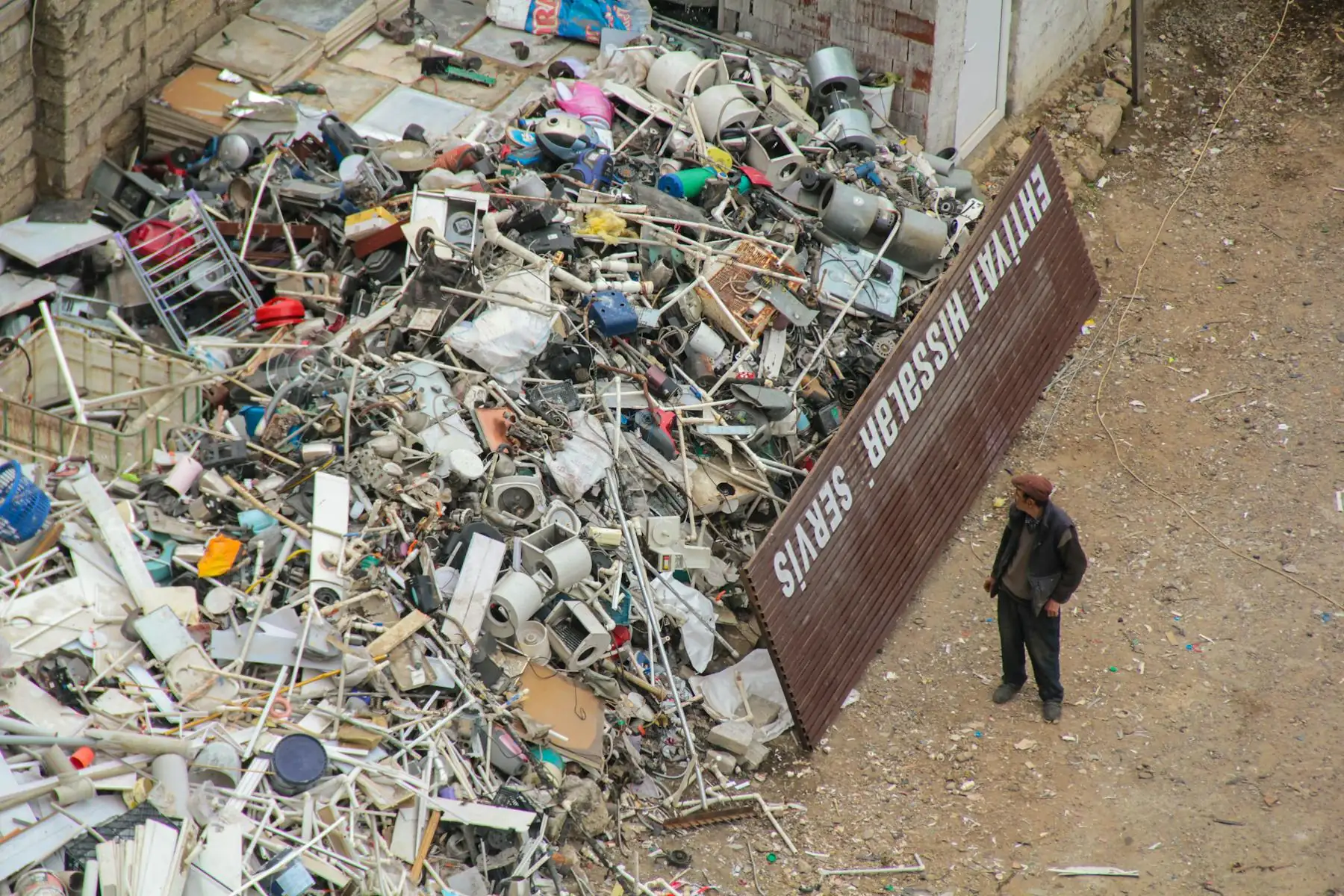
Construction and demolition debris — the drywall, lumber, roofing, cabinets, fixtures, concrete and general job-site material that fills most of our trailers — typically goes to a C&D transfer station rather than straight into the ground. A transfer station is a sorting operation. The load gets tipped onto a tipping floor, and then it gets picked apart, by machine and by hand.
What gets pulled out of a typical mixed load:
- Metal — steel studs, ductwork, appliance shells, copper and aluminum, rebar out of broken concrete. Metal has real market value and is aggressively recovered.
- Concrete, brick and block — crushed and reused as road base and construction aggregate. Clean concrete is one of the most recyclable materials in the entire waste stream, which is exactly why we ask you to keep it in its own load rather than mixed with household junk.
- Clean, untreated wood — ground for mulch, boiler fuel or engineered wood products. Painted, treated or composite lumber is a different story and generally cannot go into that stream.
- Cardboard and clean paper — baled and recycled.
- Yard waste and clean vegetative debris — brush, limbs and palm fronds are ground for mulch and compost, which is why storm and yard loads are often best kept separate from mixed junk.
Whatever cannot be recovered is what actually moves on for disposal. A cleanly loaded trailer sorts better and recovers more, which is a small but genuine reason to keep your concrete load a concrete load and your brush load a brush load.
Step four: waste-to-energy, not just a hole in the ground
Here is the part most Pinellas residents do not know about the county they live in. Mixed municipal solid waste in Pinellas is largely processed at a waste-to-energy facility rather than simply buried. The material is burned under controlled conditions, and the heat drives turbines that generate electricity that goes onto the grid.
Two things follow from that, and they matter to anyone throwing away household junk in Clearwater, Largo or St. Petersburg:
- 1The volume that ends up in a landfill is dramatically reduced compared to straight burial, which matters in a dense, water-surrounded county with very little room for new landfill capacity.
- 2It is a far less forgiving destination for the wrong material. A sealed propane tank or a lithium battery going into a combustion process is an obvious problem. So is a drum of solvent. The prohibited list is not paperwork — it is the operating requirement of the facility receiving your load.
Metal is recovered from the ash after combustion as well, so even material that goes through the burner gets one more pass for recyclables before anything is finally disposed of.
Step five: the streams that never touch your load
Running in parallel to all of this are the pathways for the things we cannot take. Household hazardous waste — paint, solvents, pesticides, pool chemicals, automotive fluids — goes through the county's residential collection program. Whole tires go to tire recyclers because Florida keeps them out of landfills. Lead-acid batteries go to lead recyclers for the same legal reason. Appliances with refrigerant get certified refrigerant recovery before the steel shell is scrapped. Electronics go to e-waste processing.
None of those pathways are hard to use. They just are not the pathway your dump trailer is on, and a single item from one stream dropped into the other is what turns a clean, finished project into a rejected load and a lost day.
What this means for how you load
Knowing the downstream makes the upstream obvious. Keep heavy material in its own load and under the yardage cap so it can be weighed, crushed and recycled properly. Keep the load level and below the rail so it can be tarped. Keep the prohibited items out so it does not get turned around on the tipping floor. Separate clean brush and clean concrete when you reasonably can, because those loads have a better destination than mixed debris does.
That is the whole system, and it is why a family-owned operation working across Pinellas, Hillsborough and Pasco cares what is in your pile. Ready to get yours gone? Book a 10-yard dump trailer online at robertlesliehauling.com, or give us a call at (727) 779-8919 and we will handle the rest of the journey from there.
Book a 10-yard dump trailer
Free local delivery, free pickup, and a family-owned crew that shows up when we say we will. Serving Clearwater, Pinellas, Hillsborough and Pasco.