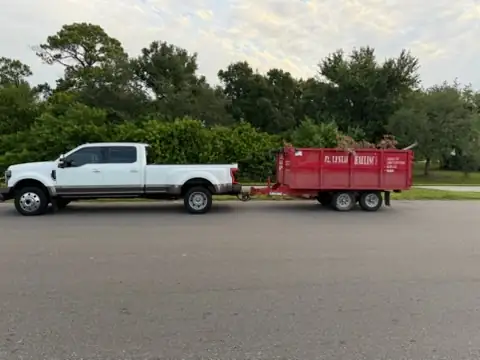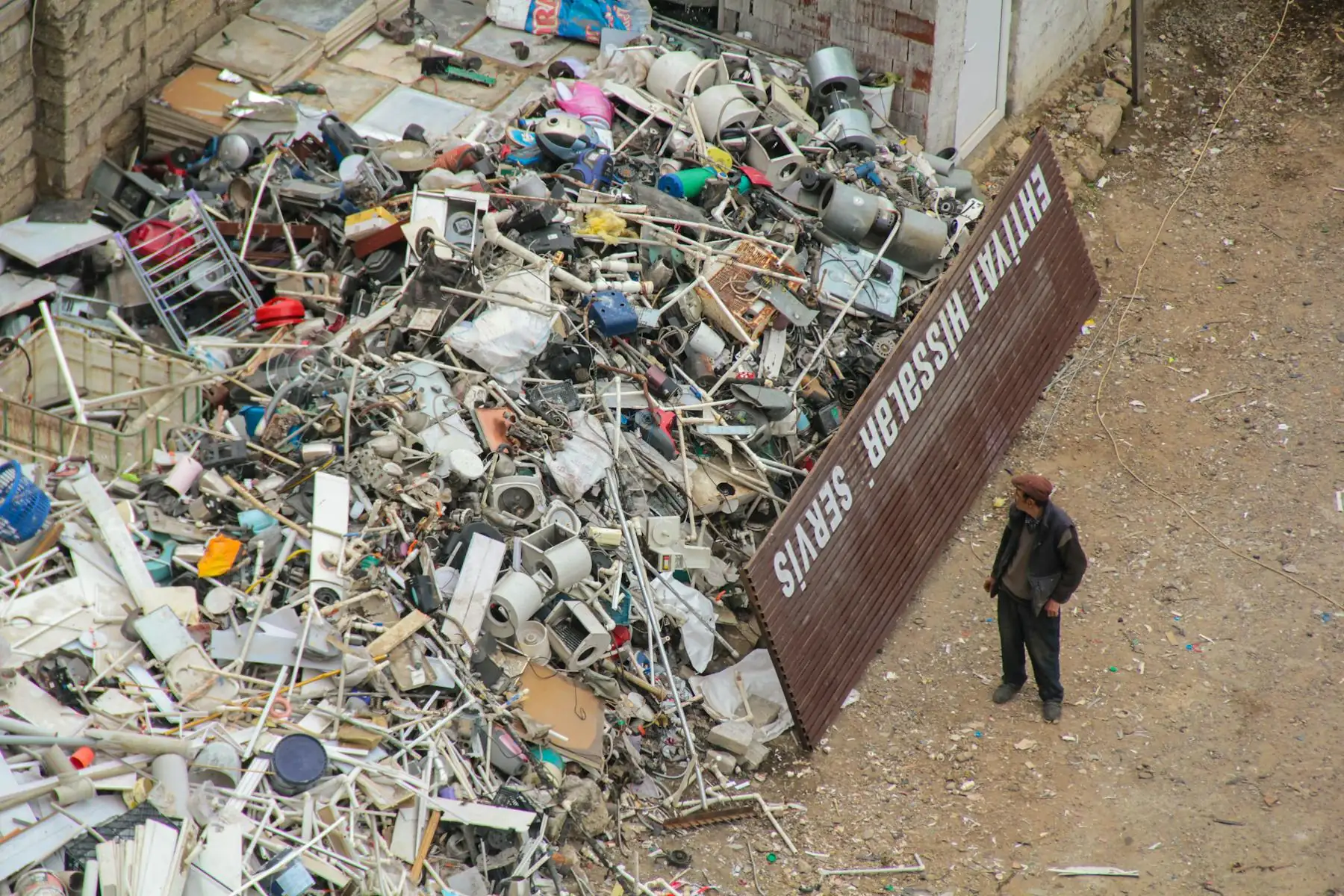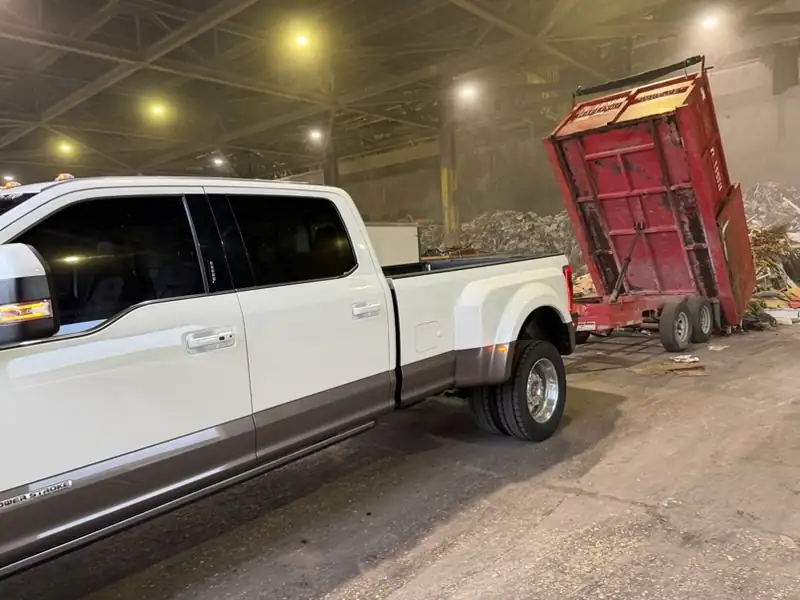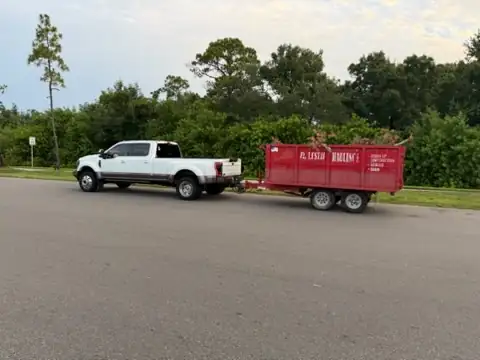
Here is the single most common misunderstanding in this business, and it costs Clearwater-area customers more time than every other mistake combined: a dump trailer is not a volume container. It is a weight container that happens to have walls.
You can fill a 10-yard trailer to the rail with couch cushions and drywall scrap and tow it home comfortably. You can also put a load of concrete in the bottom eighteen inches of the same trailer and be completely, unmovably done. Same box. Same 10 yards. Wildly different outcome. If you understand why, you will never have an overloading problem.
Weight is the real limit, not volume
Every trailer has a rated axle capacity and a gross vehicle weight rating — the maximum the frame, axles, springs, tires and brakes are engineered to carry, and the maximum the tow vehicle is rated to pull. Those are hard engineering limits set by the manufacturer, not suggestions, and they do not care that there is still room above the pile.
Debris density varies enormously. Think of it as a spectrum from fluffy to lethal:
- Light and bulky — furniture, mattresses, cardboard, insulation, plastic, dry brush and palm fronds. You will fill the box long before you approach the weight limit. This is the load where 10 yards really means 10 yards.
- Medium — mixed household junk, cabinets, framing lumber, drywall, carpet and pad, fencing. This is the sweet spot. Volume and weight tend to run out at roughly the same time.
- Heavy — roof shingles, roof tile, plaster, wet debris, sod, and anything that has soaked up a Florida afternoon thunderstorm. Water is deceptively heavy, and a rain-soaked pile can weigh dramatically more than the same pile did dry.
- Extremely heavy — concrete, brick, block, pavers, dirt, sand, rock, gravel. These hit the axle limit when the trailer looks barely used. That is exactly why heavy material is capped at roughly five yards per load: half a box, full weight.
This is why we do not publish a universal "fill line." The correct fill line for a Dunedin driveway tear-out and the correct fill line for a Largo garage cleanout are not the same line. Tell us what the material is before delivery and we will tell you what to aim for.
The four ways loads go wrong
1. Exceeding the rated capacity
The dangerous one. Past the axle rating, you are riding on tires and springs that are carrying more than they were built for, and braking distance grows exactly when you need it not to. This is not about a fee — it is about a loaded trailer behind a truck on Gulf-to-Bay with brakes that cannot stop it.
2. Heaping above the top rail
Loads have to be tarped and secured for transport. That is a legal requirement, not a courtesy, and it is what keeps a piece of your shingle tear-off from coming through someone's windshield on US-19. A pile mounded above the side rails cannot be tarped. It does not matter how light it is — if the tarp will not close over it, the load cannot legally leave.
3. Loading everything at one end
Tongue weight is what keeps a trailer tracking straight. Stack all the heavy material at the very back, behind the axles, and you unload the tongue — the trailer starts to sway, and at highway speed a swaying trailer can take the tow vehicle with it. Stack it all at the very front and you overload the tongue and the hitch and squat the back of the truck. Both are unsafe, and both are entirely avoidable by loading the heavy stuff low and centered, roughly over and just ahead of the axles, and spreading the rest evenly.
4. Ignoring water
This is the Florida-specific one. An open trailer sitting in a Clearwater driveway through a summer storm will collect water, and debris — especially drywall, carpet, sod and yard waste — will drink it. A load that was fine on Thursday can be over the line on Saturday. Tarp the trailer between sessions if rain is coming. It takes two minutes and it can save you a ton, literally.
How to load it right
- 1Tell us what the material is when you book. Concrete, dirt, tile and shingles change the plan; a garage full of boxes does not.
- 2Put the heaviest, densest material in first, low and centered over the axle area. Never save the concrete for last and pile it on top at the back.
- 3Break down bulky items — collapse boxes, cut down furniture frames, snap fencing panels. This is a volume win, not a weight win, but on a light load volume is your constraint.
- 4Keep the load level and below the top rail. If the peak of the pile is above the sides, spread it out rather than continuing upward.
- 5Separate heavy debris into its own load. Do not mix five yards of concrete with a full box of household junk on top and hope. Two right-sized loads beat one rejected one every time.
- 6Tarp it if rain is forecast and the trailer will sit overnight.
- 7If you are near the line and unsure, stop and call. We would rather answer the phone than watch you dig a trailer out.
Tonnage, overage and the scale receipt
Every rental includes a set tonnage allowance, and material over that allowance is billed per ton at the current rate on the rental page. That is a billing matter — it is normal and it is not the same problem as an unsafe or untowable load. When weight matters to a job, we provide a certified scale receipt so you are looking at the actual measured weight of your material, not an estimate and not a guess.
The practical takeaway for anyone doing a driveway, patio, roof or demo job in Pinellas, Hillsborough or Pasco: plan for weight first and volume second, and ask before you load if you are not sure. Book a 10-yard dump trailer at robertlesliehauling.com, or call (727) 779-8919 and tell us what you are throwing away — we will size the job with you before the trailer ever hits your driveway.
Book a 10-yard dump trailer
Free local delivery, free pickup, and a family-owned crew that shows up when we say we will. Serving Clearwater, Pinellas, Hillsborough and Pasco.